|
Mountaintop Removal
A nightmare. Hidden within SMCRA was a time bomb
which exploded in the 1990s. The devastation of
West Virginia mountains has reached unprecedented proportion
in the form of mountaintop removal, a form of strip
mining straight out of a Hieronymous Bosch nightmare painting.
The name says it all.
What took hundreds of millions
of years for Nature to create is being decapitated by giant
corporations who have highly paid, silver-tongued spokesmen,
lots of money, and political influence. The mountain tops,
once removed, have to be put somewhere, and often they fill
valleys.
Press releases and propaganda
to the contrary cannot erase the truth about mountaintop-removal-and-valley-fill:
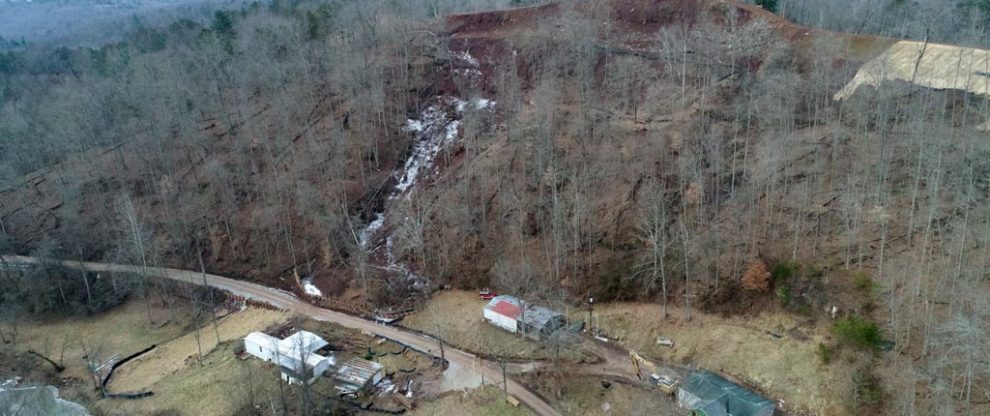
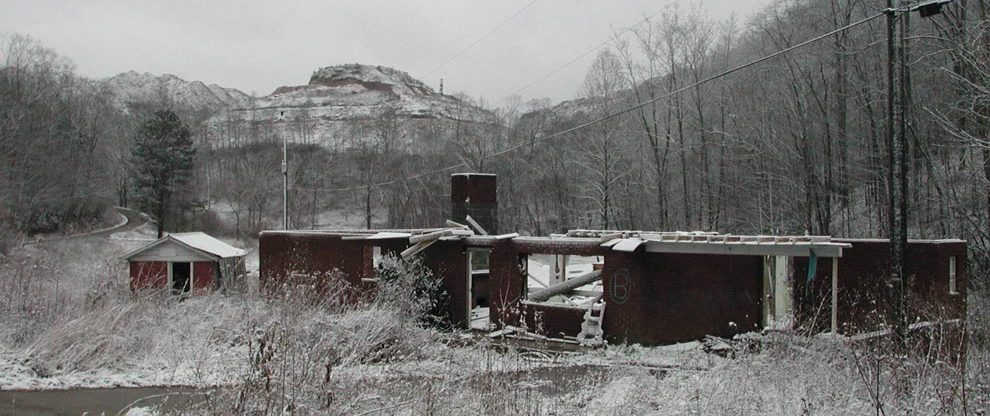
the mountain tops are gone, the
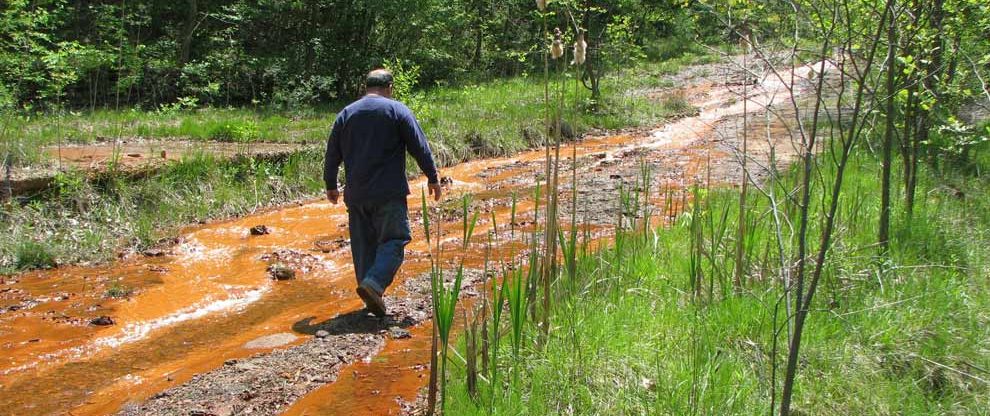
valleys are gone, the natural streams
are altered or gone, the native trees are gone, and the
soil is gone. Some of the mines cover thousands
of acres, so their impact is startling. [Note:
Valley fill also are discussed in the Streams portion of
this web site.]
Expose. Mountaintop-removal-and-valley-fill
gained notoriety in Shear Madness, an August
1997 article - perhaps expose is a more apt description
- in U.S. News & World Report: http://www.usnews.com/...
; and in the Charleston Gazette: http://www.wvgazette.com/...
Just as the Gazette has pursued the controversy with
the tenacity of a junkyard dog, in Kentucky the Herald-Leader
in Lexington has stayed on top of this contentious issue.
A big-time story.
The national news media were drawn to this
engaging story like moths to a flame. Why? Grass-roots
activism, potent visuals, and a heartfelt story to be told.
A half-hour-long ABC Nightline in April 1998 dramatically
brought mountaintop-removal-and-valley-fill to the attention
of the American public. A few weeks later on May 7,1998,
the New York Times published a front-page photo
and lengthy article.
On August 31, 1998, the
Washington Post gave this subject similar coverage. A
day later, National Public Radio's All Things Considered
brought this topic to every state in the land. Internationally,
video documentaries were made by journalists from England
and Australia. The November-December 1998 Sierra
magazine exposed the devastation left by mountaintop removal.
The cautious National
Geographic had a striking before-and-after depiction
of a decapitated mountain in its March 1999 edition. The
July/August 1999 edition of Mother Jones
magazine published a depressing article: http://www.motherjones.com/...
In late 1999 politicians screamed bloody murder after valley
fills were severely limited by a court decision. Even the
venerable Mike Wallace of Television's 60 Minutes
came to Huntington and the story he created was watched
by millions of people.
In the new millenium the
story continues in various publications. "Mountain
Madness" in the May-June 2001 Audobon. "Blasts
From the Past," the feature story in the July 22, 2001,
The New York Times Magazine.
This story "has legs,"
as journalists a prone to say.
In 2000 in West Virginia
the newly formed Mountain Party ran an anti-mountain-top-removal-valley-fill
candidate for governor.
The literati were not silent,
either. Jedidiah S. Purdy produced stinging criticism of
the current industry-regulatory melieu. See http://www.prospect.org/...
And his highly regarded first book, For Common Things:
Irony, Trust, And Commitment in America Today, is informed
by growing up in rural West Virignia with his back-to-the-land
parents. Charleston lawyer Tom White wrote the novel Chasing
Dragons which includes this controversial form of coal
mining in its story line.
Shake 'em up.
There is nothing like the light of publicity to shake up
government regulators. The notoriety of this issue
has compelled reticent governmental adminstrators to do
something. The federal Environmental Protection Agency
(EPA), the Department of Interior's Fish and Wildlife Service,
and the U.S. Army Corps of Engineers have staked new public
positions.[See Valley fills]. The West Virginia Geological
Survey completed a geological overview report: http://www.wvgs.wvnet.edu/...
Reports. OSM, too, is examining
anew its practices. In May 1999 OSM issued its Final
Report: An Evaluation Of Approximate Original Contour
And Postmining Land Use In West Virginia. The
report is at http://www.osmre.gov/...
To placate Congress OSM is issuing Monthly Report West
Virginia Permitting Activities which can be accessed
at http://www.osmre.gov/...
The monthly report contains a list of pending mountaintop
removal-valley fill applications.
Even the state's DEP belatedly
is revisiting the issue, as well it should. Its enforcement
of the approved state program in exercise of primacy has
produced a mountain of actions and inactions countenancing
mining and reclamation contrary to law.
With the entry in 2001 of
a new governor and a new director of WVDEP, who is not beholden
to the coal industry, some positive changes have occurred,
tempered by realpolitik.
For what purpose are West Virginia's
mountains and streams being destroyed? 
Last updated on Friday, July 27, 2001
|