Mountaintop removal coal mining and the "clean coal" oxymoron Stop mountain top removal coal mining - Ohio Valley Environmental Coalition

Fair Use Notice


This article originally published in The State Journal

October 12, 2006

Scientists Differ Over Impact of Valley Fills

Federal mountaintop removal mining trial continues; Experts focus on water quality.

Story by Beth Gorczyca

Depending on which scientist one asks, valley fills could cause major havoc on the quality of mountain streams near mining sites. Or the process could have virtually no impact on the insects and microscopic organisms that live in water.

During the past two weeks, both opinions have been expressed, rebutted and refuted during an ongoing mountaintop removal mining trial in U.S. District Court in Huntington.

The trial stems from a lawsuit filed by three environmental groups -- Ohio Valley Environment Coalition, West Virginia Highlands Conservancy and Coal River Mountain Watch -- against the U.S. Army Corps of Engineers for allegedly not thoroughly investigating the impact of valley fills on wildlife, people and the environment.

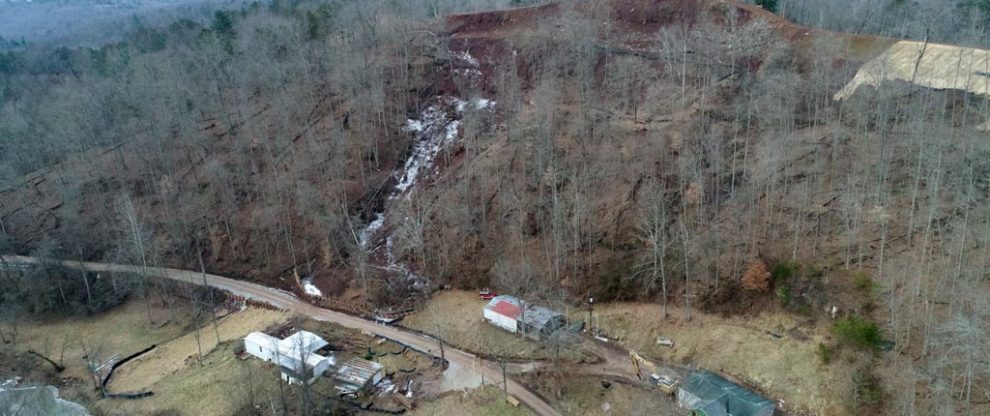
Valley fills are created when mining companies dump tons of rock and rubble left over from massive strip mining operations into nearby ravines. Federal laws require the corps -- which has jurisdiction over waterways -- to perform detailed environmental-impact statements "for every major federal action significantly affecting the quality of the human environment."

Many environmentalists say valley fills should fall under that umbrella, even when mining companies are applying for individual permits. But the corps said those studies would delay the already lengthy permitting process and would stress the agency in terms of both manpower and funding.

Plus, experts for the corps and coal companies said streams on top of valley fills are just as healthy as the original ones were.

"We are improving the habitat," said Ed Kirk, director of the biological division for REI Consultants of Beckley, during Oct. 10 testimony.

Kirk and his employer work as environmental consultants for Massey Energy and other mining companies. Massey owns four mountaintop removal mines at the heart of the lawsuit -- Laxare East, Black Castle, Camp Branch and Republic. According to one of the company's lawyers, the four mines are permitted to produce about 40 million tons of coal, which is equal to between one-quarter and one-third of the state's total coal production. The four mines also employ about 600 people.

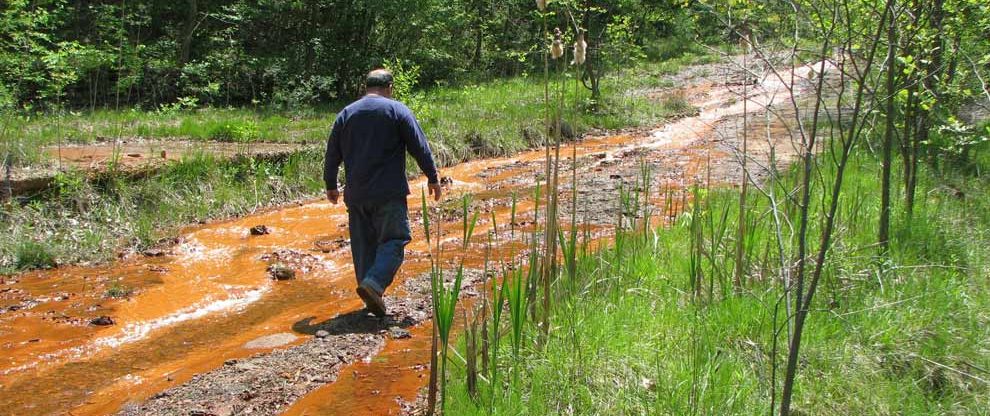
Kirk was called to refute testimony from two water experts, testifying on behalf of the environmental groups last week. The experts said valley fills snuff out not only the smallest of streams but also have a domino-effect of damaging all waterways within the region. That's because the water in the smaller streams, creeks and pools are home to microorganisms that eat leaves and twigs, and in turn are eaten by larger bugs and fish. Burying the smallest creeks could wipe out those tiny bugs and organisms.

But this week Kirk and two other biologists, testifying on behalf of Massey, said the small ponds and streams directly below valley fills can be as healthy and full of microscopic organisms as they were before the valley fill was constructed.

"It's a different community (than it was before the valley fill), but even with the valley fill you can find a healthy community" of microorganisms, Kirk testified.

His opinions were echoed by two other biologists -- Donald Cherry, a professor of zoology and aquatic eco-toxicology at Virginia Polytechnic and State University, and Mindy Armstrong, a senior scientist with the consulting firm, Potesta.

Cherry recently studied four valley fills in West Virginia to see what impact the practice had on the water. What he found was that if an ephemeral or intermittent stream was covered by a valley fill and replaced with a new stream, micro-organisms still existed in the water. They were just different types of organisms.

"The structure shifted from one bug community to another," he said, explaining that instead of providing home for bugs that eat dead leaves, twigs and other water refuse, the waterways were home to organisms that ate other things and depended on sunlight. Why the change? Because the trees that used to cover the water, blocking the sun and dropping leaves, were now gone. He said he believed the shift was healthy.

But Joe Lovett, an attorney with the Appalachian Center for the Environment and the Economy, which, along with EarthJustice, is representing the environmental groups, chipped holes in the aquatic biologists' assertions. He said most of their analysis just looked at habitat and did not test the water's chemistry. He also pointed out that when valley fills come in, mayflies, which are very sensitive to environmental changes, disappear.

Lovett also said previous papers written or co-authored by Cherry came to different conclusions about the health of water near valley fills. In one instance, a graduate student under Cherry's supervision evaluated water near valley fills using a test Cherry developed to test water for acid mine drainage. That test showed that valley fills "significantly stress" waterways.

The student included those findings in his master's thesis, which Cherry approved. And Lovett said Cherry used that same research for three other papers since then.

But Cherry now says he doesn't believe his acid mine drainage test is an appropriate method for evaluating the impacts of valley fills. The acid mine test measures the chemistry of the water in addition to the habitat. Cherry said he now uses a test that measures the amount of organisms.

"So you narrowed the scope broadly, right?" Lovett asked.

Cherry said he and the other professors who oversaw the graduate student's thesis had significant questions with the student's data. But they let him graduate and never made him change his initial findings.

Cherry said the graduate student moved away soon after getting his diploma, leaving Cherry to clean up his work. Cherry at first said he didn't know where the student was, but later admitted the same student was a co-author on Cherry's latest paper.

The trial, which began Oct. 3, may wrap up by the end of the week.


   Smart Counter Details   OVEC Home   Issues   Contact   Join   Site Map