This news story originally provided by AP through The
Charleston Daily Mail
6/23/2003
Company announces closure of W.Va. mine
ASHLAND, Ky. (AP) -- A West Virginia coal mine will close by the end of August, putting some 80 people out of work, a company executive said Monday.
Princess Beverly Coal Co. is a subsidiary of Horizon Natural Resources of Ashland and is located in Kanawha and Raleigh counties of West Virginia.
"Closing a mine is always difficult because the decision affects our employees, their families and the surrounding communities,'' said Scott M. Tepper, acting chief executive officer of Horizon Natural Resources. "The Princess Beverly mine has been a fine operation, but limited coal reserves make it economically unfeasible to continue operations there.''
Layoffs are expected to begin Aug. 21.
This news story originally provided by WV
Metro News
6/23/2003
Citizens Are Ready to Fight for Clean Air
Staff
Charleston
Pauline Canterbury is tired of having her house covered in coal dust.
Canterbury is just one of several citizens who protested outside the Office of Surface Mining in Charleston Monday evening.
Canterbury lives in Sylvester, near the Elk Run Coal Company. She says she and other residents are prisoners in their own homes. Canterbury says the dust coats everything both inside and outside her home. She says she can't even open the windows to let the air through for fear of the dust ruining other things within her home.
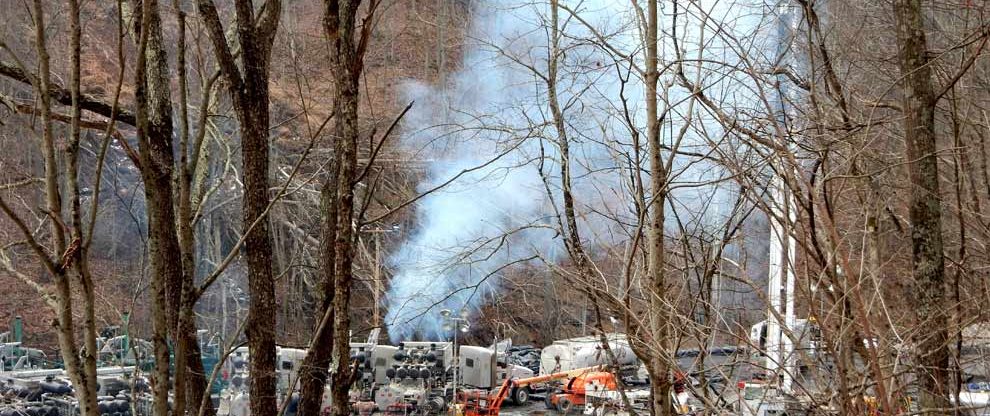
The Elk Run Coal Company had erected a dome to cover their coal processing plant but within months the dome was destroyed. The company put another up in its place but that too became damaged. Now, the company continues to process coal without anything covering it.
Canterbury says the Office of Surface Mining is to blame because they granted the company a permit to continue running. She says she wants justice. Several citizens like Canterbury are calling for the firing of OSM President Jeff Jarrett and their town to be cleaned up. Canterbury says they are good people, and they deserve relief from this constant irritant.
This news story originally provided by AP through The
Charleston Daily Mail
6/23/2003
OSM director must go to protect W.Va. mountains
CHARLESTON, W.Va. (AP) -- West Virginia's hills are doomed unless the director of the federal Office of Surface Mining is fired and the Bush administration changes its stand on coal, say residents opposed to mountaintop removal mining.
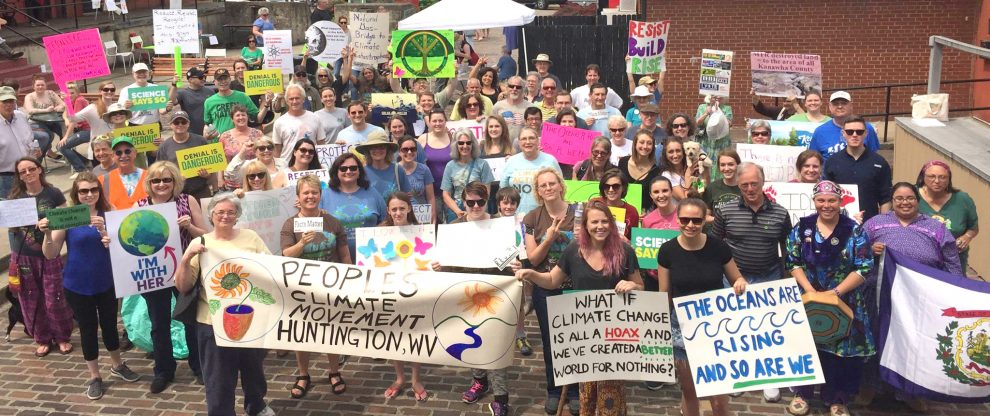
About 60 residents heard speeches and chanted that Jeffrey Jarrett must go because he is promoting the nation's coal industry by refusing to take steps to halt mountaintop removal mining in West Virginia and other states.
The protest also challenged the conclusions of a study that looked at the effects of mountaintop removal mining. The study was released last month, two and a half years after its completion was first promised, in December 2000.
Monday's protest, before OSM's Charleston field office, was one of three planned by organizers. Protests were also held in Kentucky and Pennsylvania.
OSM officials in Charleston were not available for comment. The office's normal closing time is 4:30 p.m., 30 minutes before the protest began.
"We didn't expect to be let in,'' said Vivian Stockman with the Ohio Valley Environmental Coalition.
Several speakers said residents are tense and worried about living near mountaintop removal mines and coal slurry impounds in the steep hills of southern West Virginia.
"People are scared,'' said Larry Maynard, a Delbarton resident who is fighting a proposed 56-acre coal slurry pond near his home. "It's causing tension. It's causing stress.''
A federal study on how to make such impoundments safer is about to get under way. The study will focus on impoundments in southern West Virginia. A coal slurry impoundment holds water and waste produced during the mining process.
"Our mountains are on life support,'' said Julian Martin with the West Virginia Highlands Conservancy.
The conservancy is a long-standing opponent of mountaintop removal mining and was party to a federal lawsuit that resulted in a 1999 ruling that said the practice of cutting off mountaintops and then dumping excess rock and dirt into valleys violated federal law. The ruling was later overturned.
The lawsuit also spawned an out-of-court settlement that called for federal and state agencies to issue an environmental impact study on mountaintop removal mining. The study focused on about 12 million acres and 59,000 miles of streams in Kentucky, West Virginia, Virginia and Tennessee.
The report recommended that the various permitting agencies better coordinate the way they regulate mountaintop mining.
Public hearings on the findings are scheduled for July.
Stockman said Monday's protest was part of a multifaceted effort to get Congress to modify federal laws to stop mountaintop removal mining.
|