|
This article originally provided by
The Charleston Gazette
April 3, 2008
John McFerrin
Latest round in ongoing dispute: Gift card
option irritates friends of coal industry
FOR the Ohio Valley Environmental Coalition, there is good news
and bad news. The good news is that they are not living in a
third-world dictatorship where those in power round up dissenters
and have them shot. The bad news is that they find themselves
sharing a state with people who share the mentality - if not the
tactics - of third-world dictators: people who haven't enough
confidence in the strength of their position to tolerate any
opposing views.
The ongoing dispute is over whether mountaintop removal mining is a
wise practice. This has been going on for years.
The current round is over the Kroger gift card program. Under that
program, one may buy a Kroger gift card from any one of dozens of
non-profit organizations. Kroger then donates a small fraction of
purchases made with that gift card to the non-profit organization
that the customer designates. Kroger has no role in selecting the
organization that gets the donations. Customers may select a church,
a school or any other non-profit organization that participates in
the program. One of the participants is the Ohio Valley
Environmental Coalition.
This is more than the Friends of Coal and the West Virginia Coal
Association could stand. They announced that they planned to inform
all their members both in West Virginia and in other states of
Kroger's perfidy. While not explicitly urging a boycott of Kroger,
the Coal Association announced a plan to "get the word out" to the
people who work in the coal industry and "spend hundreds of
thousands of dollars weekly to put food on the table." Since the
announcement, letters from miners or their families attacking Kroger
have started to pop up. While there is no way of knowing for sure,
such campaigns usually mean there has been some persuading going on
at work.
Let's get this straight. Kroger didn't do anything to the Friends of
Coal, the Coal Association or anybody else connected with the coal
industry. It only gave its customers an opportunity to choose to
donate to the Ohio Valley Environmental Coalition. It didn't tell
its customers they had to donate to it or to anybody. It didn't
suggest that its employees write letters to the editor condemning
the Coal Association.
So what is this Ohio Valley Environmental Coalition? Is it so evil
that a small, neutral connection to it, the kind Kroger has,
warrants the wrath of the Friends of Coal and the Coal Association?
In the first place, they are espousing a majority view. According to
polling data, mountaintop removal mining is opposed by two-thirds of
the population of West Virginia. It is also opposed by the Ohio
Valley Environmental Coalition.
In its opposition, its tactics are solidly American. When it has the
opportunity to speak, it criticizes mountaintop removal mining. Its
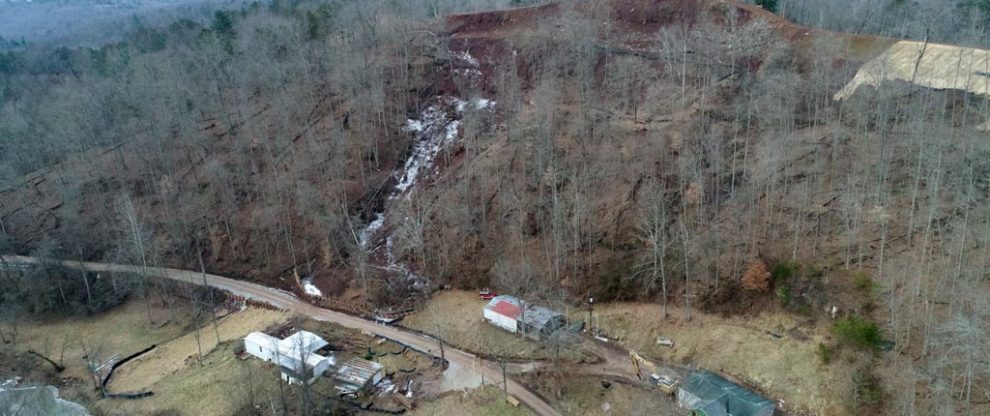
position is that such mining is destructive to the land and people
of West Virginia and that it should be eliminated. It is not a
remarkable message. It is an opinion held by a majority of West
Virginians.
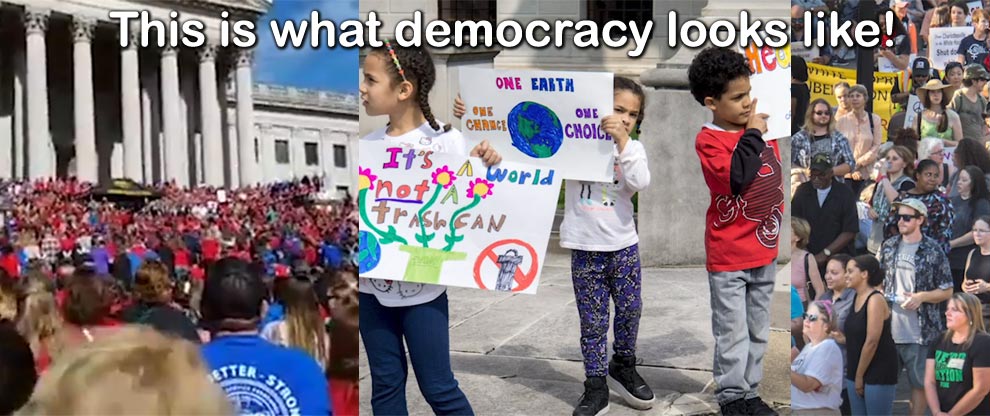
Even the minority of West Virginians who disagree should realize
that speaking out is what American democracy is all about. People
have a right to be heard.
OVEC's other tactic - the one that has the Coal Association and its
publicity arm, the Friends of Coal, all riled up - is surprisingly
conservative. They go to court to seek enforcement of environmental
laws. In the instance that has the coal guys in an uproar, OVEC
managed to persuade a federal judge to enforce the federal Clean
Water Act. The result of the enforcement was a restriction on
mountaintop removal mining.
While the coal guys characterize anyone who disagrees with them as a
radical, the court system is inherently conservative. It enforces
laws approved Congress. The Clean Water Act was passed during the
Nixon administration by an overwhelming majority of the United
States Congress. In the case of the coal industry, it is being
enforced by a federal judge.
The federal courts are not the forum of choice of radicals. To get
to be a federal judge, one has to be appointed by the president and
confirmed by the U.S. Senate. It is a system designed to weed out
lunatics. One doesn't get to be a federal judge without being
acceptable to two branches of government and being more or less
acceptable to the prevailing political system. The judge who decided
the most recent mountaintop removal case, Robert Chambers, was
nominated and approved without controversy.
The Coal Association needs to lighten up. This is America. If you do
something illegal, someone is going to call you on it. Someone is
going to go to court to make you stop. If you do something that a
lot of people find abhorrent, someone is going to criticize you.
What the Ohio Valley Environmental Coalition does is not some
aberration; that's the way things are supposed to work.
The Coal Association has more lawyers than Carter has little liver
pills. If it doesn't like the result in court, it can appeal.
OVEC believes that mountaintop removal mining is harmful to our
state. If the coal guys think otherwise, they can say that. They
already have billboards everywhere. Within walking distance of my
house there are two pro-coal billboards. They can buy some more of
those TV commercials with the cutesy animated bug talking about how
great mountaintop removal really is.
What they shouldn't do is attack their opponents and threaten
boycotts of anyone who is remotely connected to its opponents. It's
not just that such tactics are the province of those who know in
their hearts that their position on the merits is untenable. Worse
than that, it's un-American.
McFerrin, a Beckley lawyer, is a Gazette contributing columnist.
|