|
This news story originally provided by
The
Charleston Gazette
March 22, 2005
Bush, industry seek reversal of mine ruling
By Ken Ward Jr.
Staff writer
A federal judge overstepped his authority when he blocked the
streamlined permitting of new mountaintop removal coal mines, the
Bush administration says in a new legal brief.
Lawyers for the Army Corps of Engineers asked a federal appeals
court to overturn the July 2004 ruling by U.S. District Judge Joseph
R. Goodwin.
Corps lawyers said that Goodwin’s ruling came in the third legal
effort to “halt the practice of valley fill mining.”
In a separate brief, coal industry lawyers also asked the 4th
U.S. Circuit Court of Appeals to throw out Goodwin’s ruling.
Industry lawyers criticized Goodwin’s decision as the “latest
unwarranted and impermissible dismantling” of mountaintop removal
regulations by federal judges in Southern West Virginia.
Since Jan. 1, the corps has approved seven new mining projects in
West Virginia through more thorough permit reviews, agency officials
have said.
Over the last year, coal production in West Virginia is up about
7 percent over the previous year, according to the U.S. Department
of Energy.
Late Friday, the Corps and various industry groups filed the
first in a series of briefs with the Richmond, Va.-based appeals
court.
Since 2001, the 4th Circuit — dubbed the nation’s most
conservative appeals court by The New York Times — twice overturned
rulings by the late U.S. District Judge Charles H. Haden II to force
more strict regulation of mountaintop removal.
As with Haden’s two rulings, the case before Goodwin deals with
complicated questions about how the federal Clean Water Act applies
to strip mining.
Specifically, the Goodwin ruling examined the corps’ historic
practice of approving valley ill waste piles through a Clean Water
Act authorization called Nationwide Permit 21, or NWP 21.
Under the law, such permits are supposed to be used only to
approve categories of activities that, cumulatively, would have
minimal environmental effect.
In October 2003, the Ohio Valley Environmental Coalition, Coal
River Mountain Watch and the Natural Resources Defense Council sued
the corps over this practice. Lawyers for those groups argued that
the corps could only approve valley fills through individual
permits, which receive more detailed reviews.
In his July 8, 2004, opinion, Goodwin ruled that the corps had
never concluded that valley fills caused only minimal adverse
impacts.
Without such a finding, the judge said, the corps cannot use NWP
21 for any mining permits.
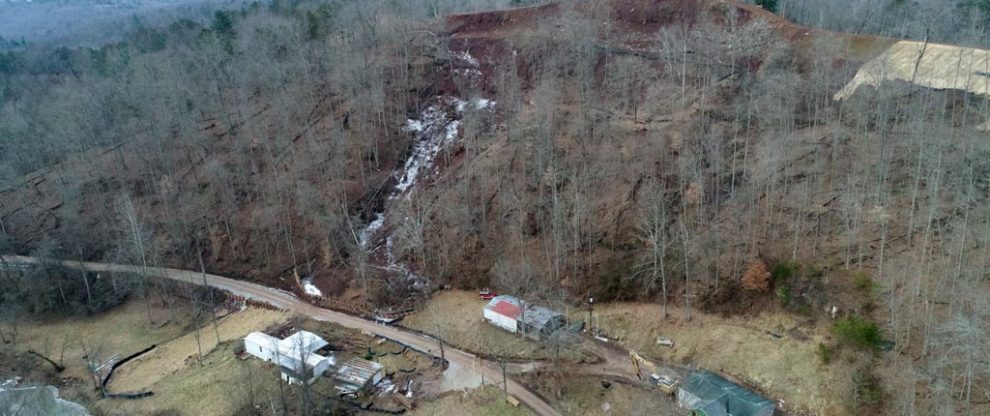
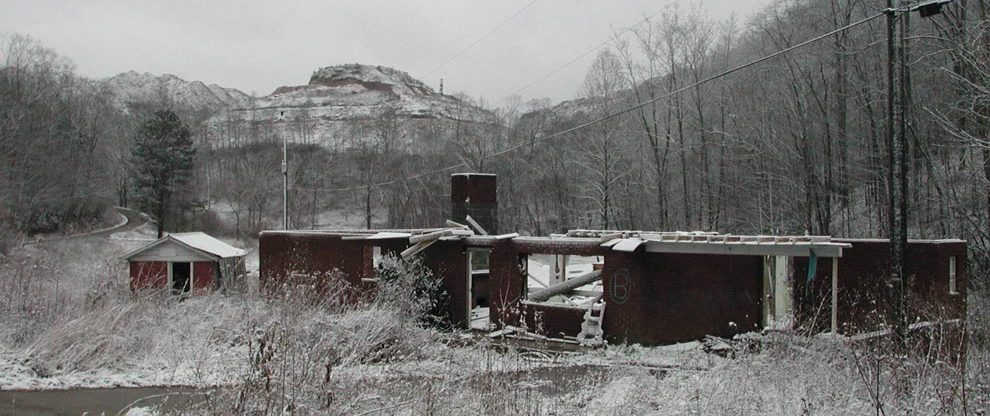
In mountaintop removal, coal operators blast off hilltops to
uncover valuable, low-sulfur coal seams. Leftover rock and dirt is
shoved into nearby valleys, burying streams.
A 2003 draft study by the corps and other federal agencies found
that 1,200 miles of Appalachian streams have been buried or
otherwise “directly impacted” by valley fills between 1992 and 2002.
That 4 1/2-year study found that past, present and future mining in
the region could destroy 1.4 million acres of forest, or 11.5
percent of the study area.
In its brief, the Bush administration argued that the corps had
properly implemented congressional intent that nationwide permits
streamline the approval process for activities that bury streams.
“This approach by the corps strikes the best balance between
environmental concerns and Congress’ desire that a more streamlined
and generalized permit for categories of activities be made
available, and that the wheel, as it were, not be reinvented each
time a permit is issued — in other words compelling the mining
industry to seek individual permits in all instances for valley
fills,” corps lawyers wrote.
In general, courts must defer to the interpretations of federal
environmental agencies unless actions are unreasonable or plainly
erroneous.
“That is the great irony of the district court’s approach — in
the name of advancing the goals of Congress to make a more
streamlined process available, it would in fact make unavailable any
such efficiency,” the corps lawyers wrote.
Coal industry lawyers agreed, saying that Congress “intended the
Corps to have wide leeway to structure the general permit program,
including leeway to operate just as the Corps has.”
Lawyers for environmental groups have 30 days to file their
response to the administration and industry briefs.
The 4th Circuit has not yet scheduled oral arguments in the case.
|