|
This news story originally provided by
The
Charleston Gazette
March 9, 2005
Woman makes environmental movement move
By Ken Ward Jr. Staff writer
If you see environmentalists protesting outside a coal company
office, or hear about a new lawsuit over mountaintop removal,
chances are Vivian Stockman had a hand in both.
Stockman was born in Joplin, Mo., and has lived in Oklahoma, Ohio
and Australia. But these days, she is what keeps West Virginia’s
environmental movement moving.
As project coordinator for the Ohio Valley Environmental
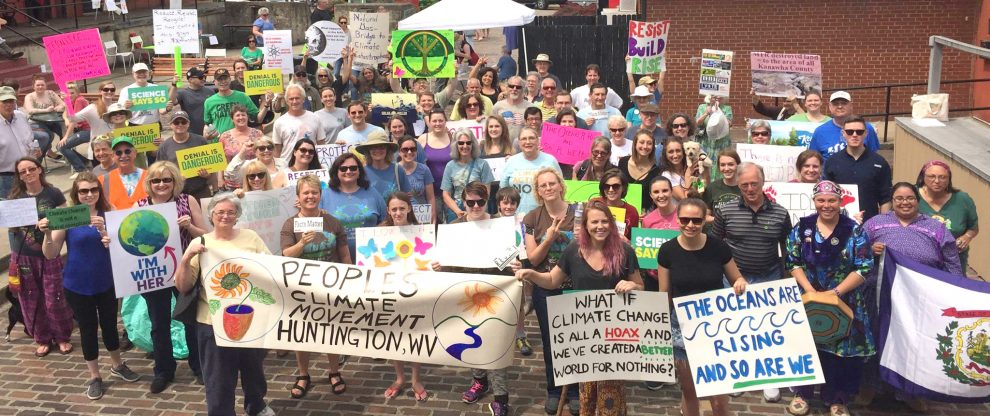
Coalition, Stockman is often out in front — speaking at rallies or
giving television interviews.
But she is also a major force behind the scenes, sending out mass
e-mails, organizing media campaigns and otherwise spreading the
word.
“One of my main roles is as a networker,” said Stockman, 43. “I
certainly don’t know the answer to every question we get, but I know
either who might, or who might know who knows.”
Among her duties for the Huntington-based coalition, Stockman
surfs the Internet every morning for environment-related news.
“I direct new information to people who might not have it,”
Stockman says. “I update the news links on our Web site,
www.ohvec.org, every day. People send me information they want
passed along.”
Stockman also writes the coalition’s “action alerts,” which go
out to nearly 1,000 subscribers. The action alert e-mail messages
arrange for turnout at protests, hearings and the like.
“People who receive our action alerts also pass them on to
others, and that’s one of the great aspects of the Internet,” she
said.
Stockman’s mother’s family was from Parkersburg. Although she
grew up in Oklahoma — her dad’s work as a chemist for B.F. Goodrich
required him to move a lot — she visited West Virginia frequently
growing up.
“It was my grandpa who instilled in me a love and understanding
of nature,” Stockman said. “His grandmother was a Cherokee, and I
believe some of the native people’s relationship to the land came to
me through him. He had wild turkey and woodchucks that would come up
to him every morning.”
At age 16, Stockman became a vegetarian.
“My reasoning at the time was that I didn’t want to kill the
animals and I didn’t want anybody else killing them for me,” she
said.
“I wasn’t and still am not against hunting animals for food,”
Stockman said. “If you can kill a deer or a rabbit, skin it, gut it
and eat it, more power to you. I just don’t want to do that, though
I’m sure I would if it came down to survival.”
In 1983, Stockman received a bachelor’s degree in environmental
communications from Ohio State University. That’s basically training
in environmental sciences with a minor in journalism. But it would
be years before she got a job in her field.
For about seven years, she managed health food stores and a
natural food cooperative.
In January 1990, she quit the co-op and moved to Roane County.
Taking a cue from her artist boyfriend, Stockman began another
seven-year career, this time hand-painting clothing and traveling to
art shows to sell it. In 1996, she won a fellowship for visual arts
and crafts from the state Division of Culture and History.
“But, I never did well at shows,” Stockman said. “If someone
liked a vest, they’d still want it in a different color or size. The
business was expensive, and I lost money. Plus, art really wasn’t my
‘true calling.’”
In 1995, neighbor Chuck Wyrostock called a meeting at his house
about the proposal for a huge pulp and paper mill 40 miles away at
Apple Grove in Mason County.
“It would eat 10,000 trees a day,” Stockman recalled learning.
“It would use antiquated bleaching techniques that would release
deadly dioxin into the air and water; it would stink, and it would
give a dubious company massive tax breaks.”
Stockman joined with her neighbors to form the Concerned Citizens
Coalition of Roane, Calhoun and Gilmer Counties to fight the mill.
At some point during the successful pulp mill protest, Stockman
helped open a branch office for the Ohio Valley Environmental
Coalition in Spencer. Years later, the coalition hired her as a
staff member.
Eventually, Stockman gave up her artwork altogether to focus on
being a full-time environmental organizer.
Stockman said her favorite part of the job is her work as media
liaison. In addition to outreach to local newspapers and television,
Stockman spends a lot of time showing out-of-state reporters — from
publications like National Geographic and The New York Times to
international media like the Canadian Broadcasting Co. — around West
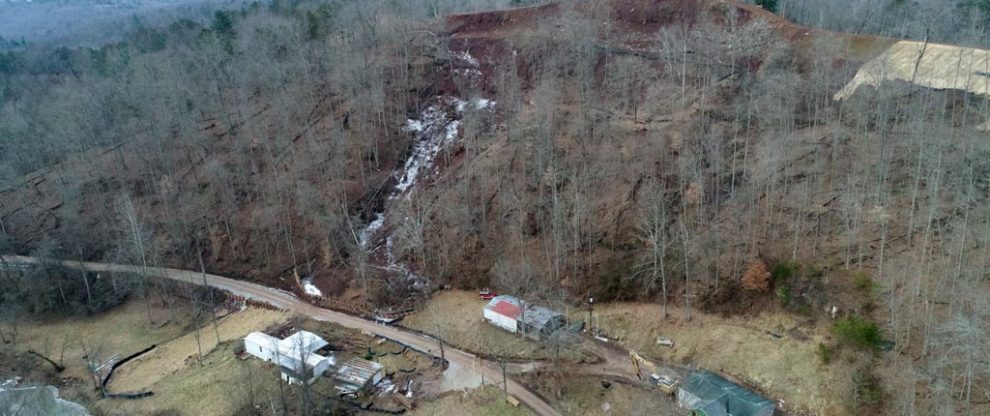
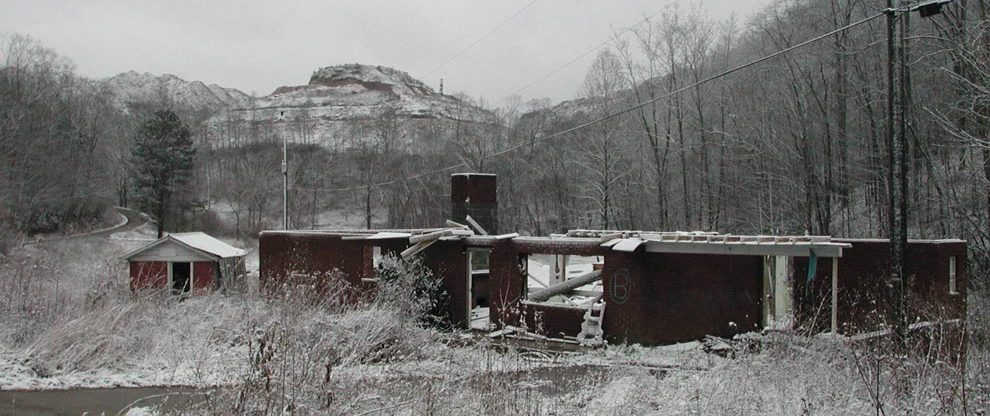
Virginia’s coalfields for stories about mountaintop removal.
“It’s so terribly important that we spread the word of
mountaintop removal beyond Appalachia, because West Virginia’s
regulators and politicians seemed so scared to stand up to the coal
industry,” Stockman said.
“What some may be surprised to know is that, to outside
journalists, I give out the contact information for the West
Virginia Coal Association and various regulators as readily as I
drive journalists to meet with coalfield residents and see
mountaintop removal firsthand,” Stockman said.
“We are certainly not afraid of having the media explore all
sides of the story,” she said. “I do hear journalists saying that
they have a hard time getting the West Virginia Coal Association to
return calls or schedule appointments.
“I guess the industry thinks the truth hurts them.”
To contact staff writer Ken Ward Jr., use e-mail or call
348-1702.
|