APPALACHIA, Va.
It hurled like a cannonball into Dennis and Cindy Davidson's
house, right through the wall of the bedroom and onto the bed where
3-year-old Jeremy was sleeping.
The huge boulder continued its path, crashing through a closet
before finally stopping at the foot of 8-year-old Zachary's bed.
Zachary would be fine. Jeremy was crushed to death.
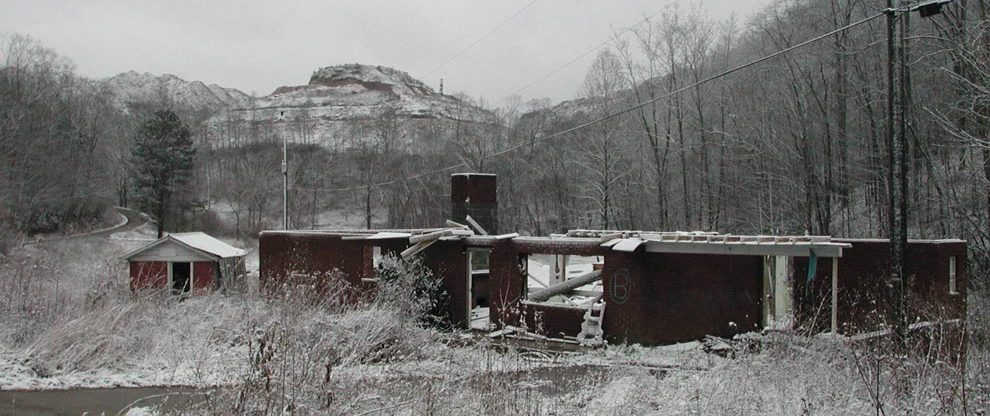
A bulldozer operator widening a road at a strip mining operation
atop Black Mountain had unknowingly dislodged the half-ton boulder
that August night. And now, more than four months later, Jeremy's
death is still being felt across the coal mines of southwestern
Virginia.
For many residents, the toddler's death has come to symbolize
what they consider the companies' and the state's callous disregard
for their safety.
"Since the child got killed, it's sort of like when the towers
got bombed and the country came together," said Carl "Pete" Ramey, a
coal miner turned anti-strip-mining activist. "The death of an
innocent child that had nothing to do with what's going on has
brought us together. I think a lot of people feel guilty they didn't
do something before."
In this corner of the state, more than 400 miles southwest of
Washington, officials have scrambled to respond to the anger and
grief that has led residents on protest marches through town. A
special prosecutor is investigating whether to bring criminal
charges. The state mining agency has fined the mining company
$15,000 -- the legal maximum -- and proposed changes in the law. In
a report, the state agency quoted philosopher George Santayana's
dictum about those who ignore history being doomed to repeat it and
vowed, "This tragic accident will not be forgotten."
The Davidsons, who have filed a $26.5 million lawsuit against the
mining operators, are hoping that Jeremy will be remembered as a
catalyst for change.
"I keep asking Cindy, 'Why couldn't we have had his bed sitting
against another wall?' " Dennis Davidson said in an interview as his
wife sat beside him, wiping away tears. "We had no idea when we put
him to bed that a stinking 1,000-pound boulder could come crashing
through the house.
"I don't want my son's death to be in vain. I want to see changes
in the laws so that something this stupid and careless doesn't
happen again."
Even in a region riddled with monuments to mining disasters and
fatalities, such a tragedy had never happened before.
The town of Appalachia has thrived with coal, then withered as
its heyday has passed. More than one in four of the town's 1,800
residents live below the poverty line.
The hollows outside town, like the one where the Davidsons lived,
were bucolic and peaceful places until recently. About five years
ago, surface mining started moving from distant mountaintops to the
hills directly above Appalachia, reflecting a dramatic upswing in
the fortunes of coal.
Coal produces more than half the electricity generated in the
United States, and expanding economies in this country and China
have created a huge demand for electricity. With natural gas prices
soaring, coal is more competitive.
More coal-fired power plants have been announced in the last 12
months than in the previous 12 years, according to the National
Mining Association. There is even a labor shortage.
But in the valleys of southwestern Virginia, resistance to
surface mining has been building as residents say their lives have
grown unbearable.
Ramey last year moved away from his house of 37 years, believing
that the blasting required in surface mining was sending rocks
flying into his yard. Dorothy Taulbee quit sitting on her porch and
hanging clothes out to dry because of dust from coal hauling trucks
that speed by her house. Since Jeremy Davidson's death, Mary Crow
Pace considers it too dangerous for her great-grandson to visit.
"It's been horrible," said Pace, who lives nearby. "The blasting
caused so much shaking and rocking when I was standing in the
bathroom the other day. If I hadn't been holding on to the basin, I
believe I would have fallen over. I've been here 77 years, and I
haven't seen anything like this. It ain't no fun living here
anymore. It's a scary place."
Last spring, a rock the size of a basketball tumbled down the
mountain and hit the house of Carlene Stout, the Davidsons'
next-door neighbor. "I'd like to see them buy all of us out if
they're going to do their mining stuff, or quit tearing everything
up," Stout said as she stood near the yellow police tape that still
surrounds the Davidsons' property.
Many residents said they were not surprised that someone was
killed, though they never imagined it would be a sleeping child.
Over the last three years, Wesley Lawson and his grandmother have
filed dozens of complaints with the state Department of Mines,
Minerals and Energy about surface mining near their home in the Wise
County town of Coeburn. In one complaint made in March 2003, a state
inspector reported that Lawson said "something had to be done or
someone was going to get killed."
Using seismographs and blasting logs, the agency's investigators,
however, have found little evidence that the blasting has caused
most of the damage or posed the level of danger that most residents
believe it has. The companies almost always operated well within the
legal blasting limits.
Asked why surface mining is permitted near residential
neighborhoods, agency spokesman Mike Abbott replied, "Because state
and federal laws allow it." He cited laws prohibiting surface mining
within 300 feet of an occupied dwelling and within 100 feet of a
public road.
In the five years they lived beside Black Mountain, the Davidsons
had never complained of problems.
The only danger they warned their sons about was the speeding
trucks.
On Aug. 19, Dennis Davidson, 38, came home from his job as an
inventory clerk and played ball with his sons. Cindy Davidson, 32,
who works at a day-care center, prepared supper. Jeremy fell asleep
on his mother's lap, and she tucked him into bed.
According to a report by the state mining agency, A&G Coal Corp.
employees on the evening shift were widening a road to handle
18-wheel coal hauling trucks at a mine called Strip Number 13.
About 2:30 a.m., a bulldozer operator pushed topsoil toward the
outside berm. Seated behind a large blade with only the bulldozer
lights to guide him, he did not realize rocks had been pushed over
the mountainside, covering a half-acre.
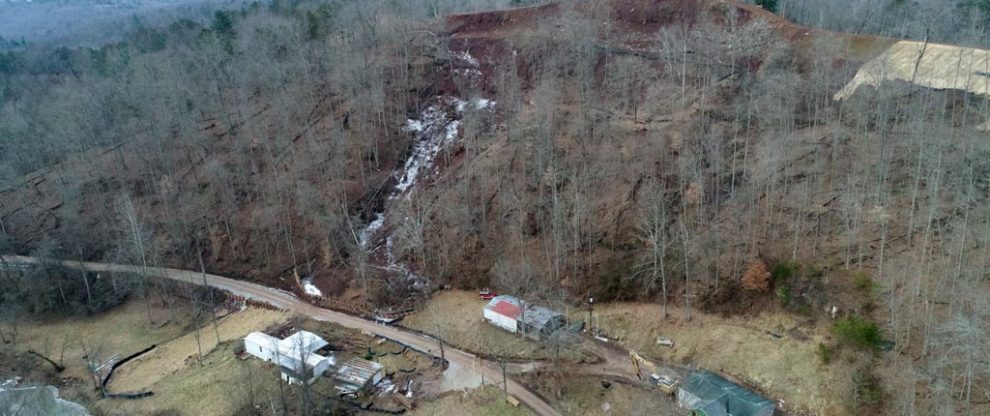
The state report says one boulder about the size of a large
microwave oven traveled 649 feet down the wooded mountainside before
crashing through Jeremy's bedroom wall.
The A&G work crew did not learn about it until an hour later,
when a mechanic driving home at the end of his shift passed the
Davidsons' house and saw the ambulance. After asking what had
happened, he returned to the mountaintop to alert his co-workers.
The agency contends that Jeremy Davidson died not because the
laws were lax but because existing laws and rules were broken. It
has accused A&G of "gross negligence." Elsey Harris, an attorney for
A&G, declined to comment, citing the lawsuit and potential criminal
charges.
The Davidsons have largely stayed out of the public debate that
has ensued. When asked in an interview whom they blame for their
son's death, they turned to their attorney, Del. Terry G. Kilgore
(R-Scott).
"Anytime you have steep inclines like this, you shouldn't be
pushing boulders toward people's residences," he said.
"It's an accident waiting to happen."
That conclusion is supported in two reports the state mining
agency has issued. It said the mining company's permit did not
authorize the road widening.
It accused the company of negligence for doing the work at night
above occupied dwellings and using an inexperienced bulldozer
operator working without adequate lighting.
It issued three violations and fined A&G the legal maximum of
$5,000 for each violation. The company is appealing the citations.
Since the accident, the Department of Mines, Minerals and Energy
has stepped up its review of mining operations in the area.
Inspectors have flown over the mountains in a helicopter looking
for violations and visited every local mine, seeking potential
problems.
Many residents are angry at the agency, believing it has failed
to protect them. Some never complained, saying they knew that
nothing would come of it. Local legislators appointed by Gov. Mark
R. Warner (D) to a panel overseeing the investigation said they were
struck by the level of frustration.
"Not only are they down on the coal companies, they're down on
DMME," said Sen. Phillip P. Puckett (D-Russell), who attended a
four-hour meeting with residents last month. "The last thing they
said to us was, 'Thank you for coming and hearing us, but we don't
think you're going to do anything.' There's an issue of
credibility."
Abbott, the agency spokesman, said there is little more that
investigators can do unless laws are strengthened. The agency has
proposed several changes, including a requirement that the companies
notify nearby residents of their plans at least three hours before
work begins.
The agency also has suggested increasing the maximum penalty for
violations resulting in injury from the current $5,000 to $70,000.
The Davidsons say they would be pleased if new requirements
arising from their tragedy were passed. They would like them to be
known as "Jeremy's law."
"It would be an honor to his memory," said Cindy Davidson.
As Christmas approached, Jeremy's loss was keenly felt by his
parents and brother. They did not put up a tree in their rented
apartment, because the boulder tore through the closet where the
ornaments were stored.
The accident has been particularly hard on Zachary, they said.
Most weekends, they take him to visit his brother's grave. He
usually picks up the ceramic bunny rabbits the Davidsons have placed
among the artificial flowers.
After one of their last visits, he told them, "When we move, I
don't want to live by a hill. I may be next."