|
This news story originally provided by the The
New York Times
7/10/04
Federal Judge Rejects Process for Approval of Mining
By FELICITY BARRINGER

WASHINGTON, July 9 - A federal district judge in West Virginia struck down on
Thursday an Army Corps of Engineers procedure that gives a blanket pre-clearance
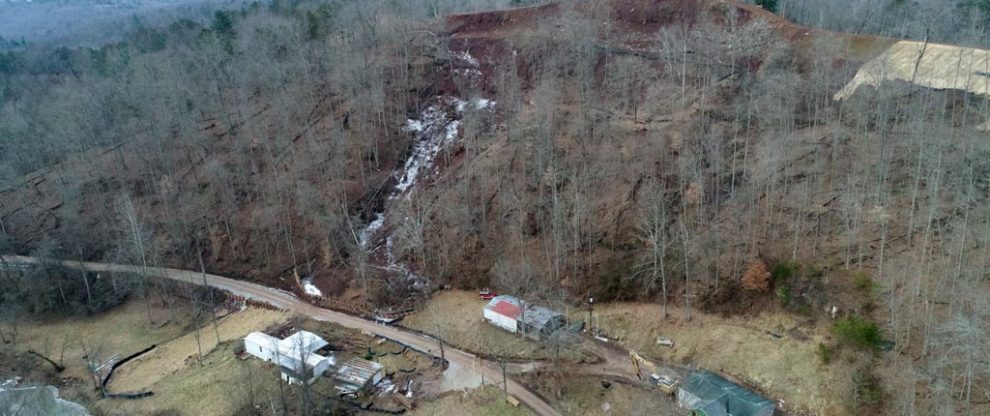
to Appalachian mining operations that dynamite away mountaintops and dump some
of the refuse into streams.
The judge, Joseph R. Goodwin of Federal District Court in Charleston, ruled
that the procedure, called a nationwide permit, improperly bypasses the
requirement that the impact of mining on streams be determined "before, not
after" such a permit is granted.
The judge added that the general permits allowed "an activity with the
potential to have significant effects on the environment to be permitted without
being subject to public notice or comment," in violation of the Clean Water
Act.
He added that "a post hoc, case-by-case evaluation of minimal impact
defeats" the purpose of the law.
Currently, 11 mining operations are under way under the general permit
process that was just voided. Judge Goodwin suspended any operation that had not
begun construction by Thursday, the day of his ruling.
Joseph M. Lovett, a lawyer for the plaintiffs - the Ohio Valley Environmental
Coalition, Coal River Mountain Watch and the Natural Resources Defense Council -
said Friday that the corps would have to approve the permits individually, with
an eye to both the industry's needs and a scientific evaluation of damage to the
streams where the refuse is deposited.
Science, Mr. Lovett said, "is uniformly damning for this kind of
mining." The judge's decision, he said, "is going to open the process
up." The nationwide permitting system, he said, "is just a rubber
stamp."
Bill Raney, the president of the West Virginia Coal Association, said Friday
that the decision was "disappointing, of course, because any decision like
this complicates the procedures."
The nationwide permit struck down by Judge Goodwin was one of the regulatory
controls that, environmentalists argued, were being undercut by current
policies.
Another rule, issued not by the Army Corps of Engineers but by the Interior
Department's Office of Surface Mining, restricts mining within 100 feet of a
stream. In January, the Interior Department proposed changing the law, in part
to make it more compatible with the law under which the corps operates.
If the proposal were adopted, filling valleys and covering streams would be
permitted as long as mining companies showed they had minimized both waste and
its environmental impact.
Blain Rethmeier, a spokesman for the Justice Department, said Friday that his
office was studying the ruling and would have no immediate comment.
"Obviously the administration believes in the importance of responsible
coal mining to the economy and energy production, but is also committed to
complying with all the environmental laws," Mr. Rethmeier said.
Mountaintop mining, which is less labor-intensive and more productive than
earlier strip-mining operations, has come to dominate mining activity in central
Appalachia. Mining companies are required to do substantial remediation,
including relandscaping the hills they have cut away.
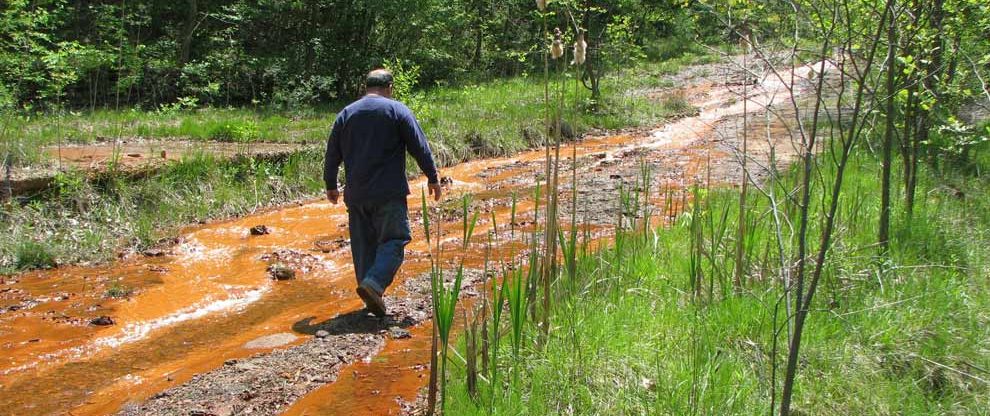
But opponents contend that the narrow valleys nearby are defaced and their
streams effectively ruined by excess fill.
In his ruling, Judge Goodwin said that citizens did not have enough access to
the decision-making process. Speaking of the environmental groups that brought
the action, he wrote that the nationwide permit procedure "has abolished
the plaintiffs' opportunity to object to proposals to discharge before they are
authorized, and the nature of the corps' permitting process has made it
difficult to object afterward."
The permit, he said, "is already impacting the waters of the United
States," adding that a federal Fish and Wildlife Service estimate showed
that hundreds of miles of streams in the Appalachian coal fields have been
filled in accordance with the general permit.
Robert McLusky, the lawyer for the coal associations, said Friday that if the
judge's ruling remained unchallenged, permits would "take more time and
they cost more money to apply for."
On this point alone, his opposing counsel agreed. Mr. Lovett said Friday:
"One of two things has to happen. Either the corps has to promulgate a new
nationwide permit, or industry has to apply for new individual permits, which
will also take a long time."
|