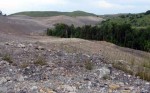
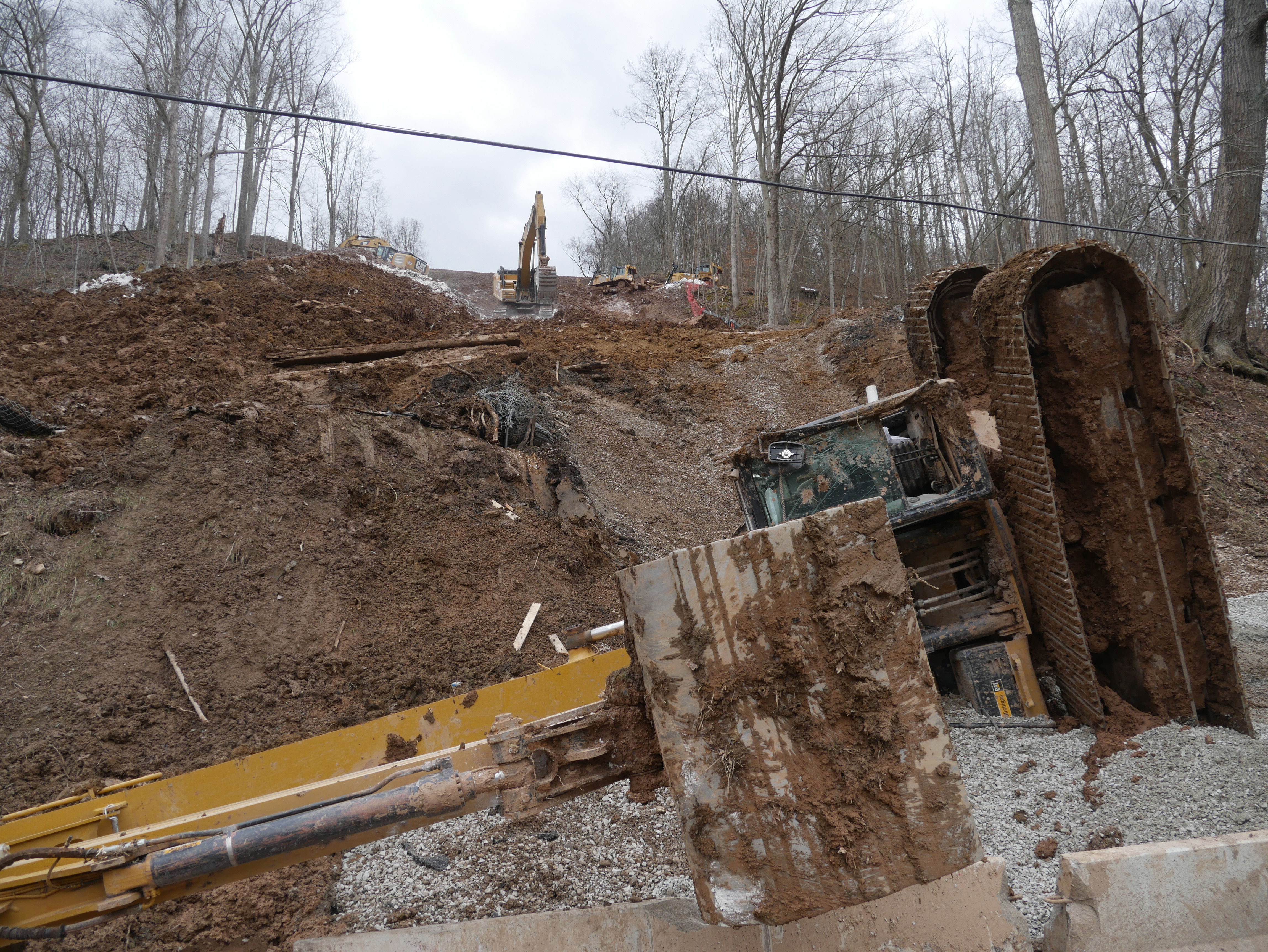
Mountaintop removal coal mining and the "clean coal" oxymoron Stop mountain top removal coal mining - Ohio Valley Environmental Coalition

World Social Forum
Porto Alegre, Brazil

January 23 - 27, 2003

Reflections on the World Social Forum

By Dianne Bady
Co-director, Ohio Valley Environmental Coalition (OVEC)
Huntington, West Virginia

After the World Social Forum, Vivian Stockman and I flew to Iquacu Falls on the borders of Brazil, Argentina and Paraguay. We explored the waterfalls and jungle there for three days.

Overview

Before I went to the World Social Forum, I knew some things about US foreign policy, sort of; but I kept those thoughts safely on the edge of my consciousness. Now, after what I saw and what I learned in Brazil, I feel those things deep in my heart and in my gut. And I'm not quite sure what to do about it.

Do I forcibly push all this new knowledge and emotion back to the edge, telling myself that other people are working on these issues? That under the Bush energy and war regime, we in OVEC can't even keep up with all the destruction, and planned destruction, that's happening in West Virginia, much less add something new?

Yet I can't pretend that I'm not in the grip of something. My time in Brazil and Argentina brought me a sense of new wonder, new pain, and new hope. It's all still very fresh in my mind and in my heart; it lives with me.

I fell in love with the rainforest - the waterfalls, the toucans, the roseate spoonbills, the impatiens that I so carefully tend at home, but which wildly burst into bloom at the edge of the waterfalls and rainforest, that grow even out of the rocks. I fell in love with hundreds of different kinds of butterflies - the wonder and awe that they inspired in me is with me still.

But so is the pain. Did I learn too much about the myriad ways that US dominated foreign policy enables mostly-US-based energy and resource corporations to run roughshod over other countries, other ecosystems, over other people? What do I do with the pain I still feel over answering the same question from resource activists working in several poor countries, "have people in your group been murdered?" This has happened in their movements.

So I puzzle over how many of my tax dollars go to support the corporate-based foreign policy that makes it possible for poor, inconvenient people to just disappear when they get in the way of big energy profits.

Here in central Appalachia, where coal corporations are blowing up mountains, being an environmental activist during the George W administration is no picnic. But we don't live with the threat of being murdered.

Fortunately, I also feel a new sense of hope. I learned more about how in Europe, the transition to renewable energy sources is far ahead of the US. I discovered that social movements led by ordinary people in Brazil and Venezuela have brought a new style of president to their countries - presidents who have pledged to put the needs of their own hungry people first. Folks in Porto Alegre said that if the damage caused by neo-liberal foreign policy is to be curbed, it will happen first in South America; it IS beginning to happen in South America.

Some thoughts on politics there and here

I'm no expert on foreign politics. I'm still trying to piece together a coherent sense of what I learned from so many voices, so much reading of materials that I gathered at the World Social Forum. But here's what seems to be the case with Brazil, as far as I can tell, and how there's relevance for us in West Virginia.

Previous Brazilian presidents were cooperative with the neo-liberal policies that the US and other rich countries imposed upon them. Many Brazilians believed the promises of increased prosperity. But now those promises seem empty to most folks. Unlike in the US, there seems to be much more active public awareness in Brazil that what's good for big transnational corporations isn't really so good for them. I heard several US folks at the World Social Forum remark in surprise that even the taxi drivers seem to have a fairly sophisticated understanding of foreign policies that have hurt their country.

The anti-neo-liberalism, and anti-US sentiments have spilled over onto billboards around Porto Alegre and onto numerous signs posted in inner Centro where we stayed. (My impression is that those signs would be there even if it weren't for the World Social Forum being held in their city.) Meanwhile, in the United States it seems as though a very significant proportion of our people are in a stupor, and can't be bothered with thinking any more deeply than about how swell George W is, how he talks real tough and how cool that is, and that we'd better go get Iraq real quick before they get us. The as-long-as-I'm-comfortable I won't make any waves, or even think too hard, syndrome. Just get an even bigger SUV, buy the newest cool thing, supersize your meals and zone out in front of the TV.

So anyway, back to Brazil's election of a populist president - when it looked possible that labor leader Lula might actually win the election, I got the impression that there was a conscious strategy by foreign capitalists to pull massive amounts of capitol out of Brazil, in an apparent attempt to demonstrate their power over that economy. I got the impression that the foreign powers (US included, or perhaps US led), did this to try to prevent Lula from being elected. So the Brazilian Real tanked, lost 40% of its value. (And that's why everything we bought there was so cheap in US dollars.)

But the people elected Lula anyway - he got way more votes than George W did. Folks liked his stridency, his promise to put feeding hungry people at the top of his agenda. Before Lula took office, however, the previous president took out the biggest loan ever from the World Bank - $30 billion. Of course there's structural adjustment that goes with the loan - which seems to often be this: spend as little as possible on human, social and environmental needs, raise interest rates, do whatever needs to be done to make it possible for transnational corporations to liquidate the country's resources as fast as possible, with as little left for the people as possible, so as to increase corporate profits and consolidate corporate power.

We've seen a similar policy here in southern West Virginia. McDowell and Mingo counties were called "the billion dollar coalfields;" where outsiders became rich from the coal that flowed out and fueled the industrial revolution that brought prosperity to many parts of the US. Yet these West Virginia counties are now some of the poorest in the country, where towns still dump their raw sewage directly into the rivers because Coal made sure there wasn't enough money left for locals to even build a civilized infrastructure.

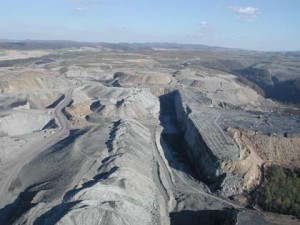
In Brazil, the new $30 billion World Bank loan was apparently intended to make it difficult, if not impossible, for Lula to keep his promise of ending hunger and putting Brazil's people first. In West Virginia, the state and federal governments are promoting the violation of federal law by making it possible for coal corporations to dump former mountains onto former streams and former neighborhoods. When masses of people became angry and took action, and a federal judge ruled in our favor, the Bush administration simply changed the rules under the Clean Water Act, now claiming that it's perfectly legal for streams to be annihilated by being covered in hundreds of feet of what-used-to-be-mountains. That, as the billboards here say, Coal is now even Cleaner and Greener.

In both cases, when lots of people took action to try to solve a corporate caused problem, the dominant political powers did something dramatic to throw a serious roadblock in their efforts.

Some other significant learnings and challenges

I am so grateful that Ford Foundation folks introduced me to three South American people who are fighting the destruction of some of the most biodiverse tropical ecosystems in the world. We met at the Ford reception, and then again a few days later with Suzanne Charle, a writer for the Ford Foundation magazine. They told me about what they are fighting to protect and I told them that we are struggling to protect one of the most biodiverse temperate ecosystems in the world, the mixed mesophytic forest. Their love for their portion of nature, their passion for their work, was a palpable energy. They said "let's stay in touch," and I agreed - Eliaz Diaz Pena and Alcides Farina kissed my cheeks and Rafaela Nicloa gave me a big hug when we parted.

Now, however, I've just barely met our deadline to edit our next newsletter, I've still got a portion of my stack of papers to go through that built up while I was in Brazil, tomorrow we meet with our ethnographers funded by Ford (thank you!), I have three foundation deadlines to meet in a week and a half, and somewhere in there, I have to have a tooth pulled. How to schedule in time for that? My husband tells me that I have too much work to do, I should delegate more to others - but my colleagues are working just as hard as I am, if not harder.

Another of my significant learnings was a workshop called "Confronting Corporations." There were thirty five of us from nineteen different countries, all talking about how mining and oil corporations, most of them US based, are ravaging their environment and making a mockery of democracy.

Activists from Columbia said they believed that the US military bases there, and US dominated foreign policy, are part of the overall strategy to allow oil companies to run roughshod over their country and their people. (Now I read the news stories of unrest and violence in Columbia, and I wonder what's really going on there. Are there significant things we're not being told? What's the US role in all of this?)

But, just like us, folks all over the world are organizing to try to force positive change.

Regular people in Thailand confounded their government by refusing to allow new coal-fired power plants to be built there. Too much pollution from the coal burning, they want no more of it. Austrian and Canadian people told of how mass mobilizations, shareholder activism, and church involvement resulted in improvements in oil activities in Sudan. People from Kazakhstan, Indonesia, Chile and Bolivia, all stressed the importance of working in international alliances.

Many are convinced that United States groups are especially important to have as working allies, because, as they say, we are in the belly of the beast. Those of us in the Confronting Corporations workshop are all facing the same problems - the greed and power of energy and mining corporations who have a disproportionate influence over our governments and over foreign policy.

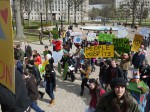
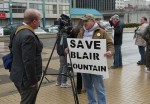
Here in West Virginia, George W comes personally to throw his public support behind Coal's plans to blow up more mountains, bury more streams and displace more people from their homes. President Bush has been here five times already. A year ago his limousine swerved on the road toward us as we protested, and a friend yelled "He's buzzed us!" But none of us wondered if anyone would be killed that night.

In Brazil and Paraguay, US political leaders throw their support in more subtle ways behind schemes to build more massive damns, to build a huge interior waterway to handle ocean going ships, which would drain magnificent wetlands habitat and destroy people's livelihoods. There's coveted minerals in the mountains there.

This is all truly insane. Our fossil fuel energy policies are not only harming specific people and specific ecosystems all over the world, our energy policies are changing the planet's climate - more heat, more drought, more glaciers melting, more devastating storms. George W essentially says, "don't worry, we'll just adapt." (Some of us have the resources to adapt a hell of a lot easier than the rest of us.) Here in Central Appalachia, the easy coal is long gone, it's already been transformed into the pollution that is changing our global climate. But George W's policy is to get every last bit of polluting coal blasted out of our mountains, even if the southern part of the Mountain State is left devoid of peaks, and devoid of much land that people can actually live on.

Alternatives

There are alternatives. The World Watch Institute's latest annual report says that renewable, cleaner energy technologies are advanced enough to satisfy the world energy needs NOW. Just think what we could do if we had a Manhattan Project for alternative energies. A recent study called Job Jolt shows that in transitioning to cleaner renewable energies, ten Midwestern states could create 200,000 jobs. World Watch says the main thing lacking in getting alternative energies in place is the political will.

Implications for our work at OVEC

The more I learned at the World Social Forum, the more I knew that OVEC's work on state-level political campaign finance reform is crucial. Our country imposes its greed for fossil fuels not only on our people here in West Virginia, but on many countries throughout the world who suffer grievously because of it. Too many of our state and national politicians are essentially brought into office by the money of fossil fuel magnates.

Our national campaign finance system is not likely to change radically until many more states follow the lead of Maine and Arizona and adopt public financing options. Because of OVEC's work over the past several years, West Virginia is moving closer to the day when public financing of elections becomes a reality. If it can happen in West Virginia, it can happen in any other state in the US. And if the people actually controlled the political process in this country, we'd be moving to a sustainable energy future a whole lot faster than we are now. The United States wouldn't need to dominate so many countries to get a disproportionate share of the world's fossil fuels, or go to war in order to secure currently "underproducing" oilfields. Politicians wouldn't have to pay back the big campaign contributors who put them into office.

Messages to the interested philanthropic community

I know I see the world through the eyes of a fossil fuel activist, but even so, I do believe that a disproportionate amount of global injustice stems from the US greed for "cheap" energy and other resources, and from the US political system which has the best politicians that Oil and Coal can buy. We're suffering from a system where, since powerful corporations aren't profiting from renewable energies, those renewable energy sources are not being seriously pursued in the United States. And most war critics believe that if Iraq wasn't sitting on vast oil reserves, we probably wouldn't be on the brink of invading.

As World Watch has pointed out, the main thing lacking in getting renewable, decentralized energy sources in place is the political will. That political will is only going to happen if massive citizen pressure makes it happen. This needed pressure could be stronger if there were international grassroots alliances working to publicize the damages that the unsustainable energy economy is causing now - and promoting a sustainable future. From West Virginia to Kazakhstan, Indonesia, Columbia and Iraq, it's obvious that the longer the US remains addicted to "cheap" unsustainable energy sources, the more irreversible damage to our planet will result - and the more democracy worldwide will be squashed in order to protect "our" interests.

In South America, the Pantanal and Amazon's unrivaled ecosystems, and people's subsistence, wouldn't have to be threatened by enormous dams if alternative energy sources were in wide use and readily available.

Because the U.S. IS the major Superpower steering this global beast, it is essential that people in this country awaken to HOW globalization is not only impacting their own lives, jobs and economy, but how neo-liberalism is leading to great social unrest all over the world because of the economic inequities. Mobilizing MORE people here is essential in harnessing the beast.

I know there are already international alliances with third world folks and US policy groups, and this is important. But I think that more grassroots alliances are needed. As is so well demonstrated by the amazing achievements of Ford's LCW winners, grassroots groups engage regular people in a way that policy groups can't. Grassroots leaders know that you don't build political power only by having the best facts or the best thought out solutions - you build political power by engaging masses of people to take very visible action. Grassroots leaders know that to build this kind of political power, a level of interpersonal awareness and a grasp of group dynamics is needed, and this is often lacking in strictly policy-oriented organizations.

I'd suggest to the philanthropic community that if you are to consider things such as grassroots international alliances, or "sister organizations," that you give the grassroots groups some flexibility in how to initiate and develop such alliances. In our experience, successful grassroots strategies don't usually come from 12-month plans where every step is laid out ahead of time, but by repeated meetings and other communications where different voices are heard and many possibilities are considered. Strategic planning is somewhat fluid for us because our action plans arise out of sustained human interactions.

I realize that Ford and other foundations struggle with the issue of how to meet increasing demands at a time of decreasing resources, just like we do. But my time in Brazil made me realize deep in my heart that we in the United States ARE in the belly of the beast, and that gives us a greater responsibility to find ways to work with those who are being hurt because of our country's domination of global policies.

I'm reminded of a quote by theologian Walter Wink: "Those of us who now enjoy affluence and freedom as well as power are predisposed to believe that benign forces shape our destiny. But to the extent that our blessings are incidental by-products of our citizenship in nations that currently enjoy domination status over others, our well-being may be more a result of flagrant injustice than divine providence" (Engaging the Powers). We fail to remember that our blessings and abundance often come to us at the expense and exploitation of much of the rest of the world's people.


See sidebar for links to other pages


   Smart Counter Details   OVEC Home   Issues   Contact   Join   Site Map