|
|||||||||||
|
|||||||||||
|
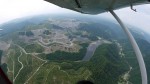
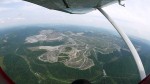
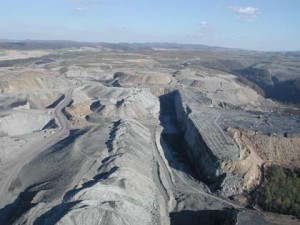
Statement Of Joan Mulhern, Senior Legislative Counsel Earthjustice Legal Defense Fund Before The Subcommittee On Clean Air, Wetlands, And Climate Change Environment And Public Works Committee United States Senate June 6, 2002(Verbal testimony - Click here for complete testimony)Chairman Lieberman and members of the Subcommittee, thank you for holding this hearing to review one of the most destructive changes to Clean Water Act regulations in decades. I also would like to thank Committee Chairman Jeffords for his support for this hearing and for the concern that both he and you, Senator Lieberman, have expressed about the consequences of the Bush administration's new rule to allow waste dumps in our nation's waters. My name is Joan Mulhern. I am Senior Legislative Counsel for Earthjustice Legal Defense Fund, a national non-profit law firm. Present for your hearing today are representatives of citizen groups from Appalachia and individuals who live in the coalfields. They are among the people who will be most directly hurt by the Bush administration's weakening of Clean Water Act rules. I am not speaking on their behalf, but I hope my comments will help to convey the gravity of the rule change and the impacts it will have not only on our nation's waters but also on many people's lives. I have some statements from individuals, local groups and religious leaders from the region. With your permission, Mr. Chairman, I would like to ask that the statements be added the hearing record. What the Bush administration did on May 3rd is eliminate from the Army Corps of Engineers' Clean Water Act regulations a 25-year old legal prohibition on the use of section 404 permits to allow wastes to fill waters. This change in the definition of "fill material" was made to give the Corps authority to permit any industry to bury any waterway under piles of coal mining waste, hardrock mining tailings, construction and demolition debris - almost any sort of solid waste. The rule change is indefensible as a matter of law and policy. It is directly contrary to the intent of Congress when it passed the Clean Water Act in 1972. The central purpose of the Act is to "restore and maintain the chemical, physical, and biological integrity of the Nation's waters." No activity is more inconsistent with the goal of protecting the integrity of waters than allowing them to be buried forever under piles of industrial waste. The EPA has declared this to be the "Year of Clean Water" in honor of the Clear Water Act's 30th birthday, which is on October 18th. Opening up the nation's waters for obliteration, in the way that this rule change does, is a perverse way of marking an important milestone in this landmark law's history. Much of the attention on this new "waste dumps in waters" rule has been on mountaintop removal and the destruction of streams into which the coal companies dump the enormous quantities of waste they create when they blow the tops off of mountains. This practice is at the center of debate largely because of the unparalleled destruction it causes and because it was for the coal companies that the change in the rules was adopted. In mountaintop removal operations, mine operators use explosives and enormous machines to rip hundreds of feet off the top of mountains to get at the coal seams. In the process, millions of tons of waste - which formerly were the mountaintop - are generated. The current method of many coal companies for disposing of this waste is to dump it into nearby valleys, creating "valley fills" that bury the streams in the valleys under millions of cubic yards of waste. Estimates vary, but most suggest that in West Virginia and Kentucky alone, where mountaintop removal is most heavily concentrated, more than 1500 miles of streams have been destroyed. It is impossible to overstate the harmful effects of mountaintop removal on the surrounding environment and communities. Not only are the waters buried under tons of rubble, the forested mountains become barren moonscapes. Mining complexes can create holes of more than 10 or even 20 square miles in the forest canopy. The communities below these massive operations are often devastated. People are forced from their homes by blasting (which often cracks their houses walls and foundations); by dust, noise, flying rocks, and the degradation of stream and well water. Life near mountaintop removal operations becomes so unbearable that generations-old communities are forced to move away. Many people, including some coalfield residents who have lost homes and loved ones in recent floods, believe flooding is made worse by mountaintop removal. It is a reasonable conclusion. When mining strips the land bare of all trees and other vegetation and the natural watercourses are buried, storm water will come rushing down more quickly into the communities in the valleys. In the floods last month, nearly a dozen people lost their lives and four West Virginia counties were declared federal disaster areas. On May 8, in a case brought by the group Kentuckians For The Commonwealth challenging one of these mines, West Virginia federal district court judge Charles Haden ruled that the Bush administration's rewrite of the regulations was beyond its legal authority. He wrote: "The Court holds that 404 of the Clean Water Act does not allow filling the waters of the United States solely for waste disposal . . . . To read the Act otherwise presumes Congress intended the Clean Water Act to protect the nation's waterways . . . with one major exception: the Army Corps was to be given authority to allow the waters of the United States to be filled with pollutants and thus destroyed, even if the sole purpose were disposal of waste. This obviously absurd exception would turn the "Clean Water" Act on its head and use it to authorize polluting and destroying the nation's waters for no reason but cheap waste disposal . . . . [A]mendments to the Act should be considered and accomplished in the sunlight of open Congressional debate and resolution, not within the murk of administrative after-the-fact ratification of questionable regulatory practices." Earthjustice could not agree more. The questionable regulatory practice referred to is that the Corps, without legal authority, has permitted this filling of streams with coal mining wastes for many years. In fact, three Corps' officials deposed in an earlier mountaintop removal case admitted they did not have legal authority to permit valley fills because their own regulations prohibited it; one, when asked why the Corps issued such approvals anyway said that they "just sort of oozed into that." The coal industry and the Bush administration argue that the companies must bury streams and forbidding them from doing so would cause economic havoc regionally and nationwide. Yet the evidence shows that neither of these claims is true. Most mining operations do not require valley fills. Between 1985 and 1999, only 20% of coal mining permits issued in Kentucky and 12% of those issued in West Virginia were issued with valley fills. For the others, there are alternatives to dumping waste in waters. And according to an economic study recently prepared for the Bush administration, even severe restrictions on the size of valley fills would add only one dollar to the price of a ton of coal and a few cents to the cost of a megawatt of electricity. There is simply no need to allow this destruction to continue. The cost to the coal companies of compliance with the Clean Water Act would be minimal, especially when judged against the huge costs currently borne by coalfield families and the environment. Some proponents of mountaintop removal claim that it is needed to create flat land for development. There are a few examples of golf courses or factories being built on former mining sites, yet it is extremely unlikely that any significant percentage of these sites will ever support development. According to one estimate from a Virginia Tech professor who has studied the issue, less than 1 percent of mined land is currently reused for any development purpose. An EPA draft study on mountaintop removal finds that, if left unconstrained, another 350 square miles of forested land will be destroyed in addition to the hundreds of square miles that have already been flattened. The Bush administration's own studies also conclude that post-mining land uses are not occurring as envisioned; remarkably, the Office of Surface Mining proposes to address this situation by seeing to it that actions to ensure that post-mining land uses do occur receive no further consideration. While much of the focus of the debate over the rule change is on mountaintop removal, and rightly so, it is important to understand that the way the rule was changed would allow any industry to seek approval from the Corps to dump almost any kind of waste into any waterway. According to the final rule, examples of wastes now eligible to be dumped in waters include "rock, sand, soil, clay, plastics, construction debris, wood chips, [and] overburden from mining or other excavation activities." Another part of the new rule makes clear that "placement of overburden, slurry, or tailings or similar mining-related materials" in waters is also to be permitted. This is not an exhaustive list - even wastes that may be "chemically contaminated" would not be ruled out under the new rule. The amounts of these wastes generated in the U.S. are staggering, as is the prospect that they could now end up in our waterways. For example, the EPA estimates that 136 million tons of building-related construction and demolition debris was generated in the United States in 1996, and this is just one category of C&D waste. A 1992 Congressional Office of Technology Assessment report estimated that the mineral mining industry generated about 1.7 billion tons of extraction and related wastes in 1987, and this does not include mineral processing and other related hardrock mining wastes. Perhaps the most startling thing about the administration's change to the regulations prohibiting the use of waste as fill is that it was done without any study or analysis of the environmental or societal consequences. If you look at the Environmental Analysis prepared by the Corps of Engineers on this rule change, Mr. Chairman, you will note that there is one thing it lacks: an environmental analysis. The document cites not one study, report or fact of any kind to support the agency's conclusion that there will be no significant impact on the environment. At the time that the Corps and EPA first proposed to eliminate the waste exclusion in the spring of 2000, the Corps admitted in response to a FOIA from Earthjustice that it did not possess even one document that supported its initial determination that no environmental impact statement needed to be prepared. That initial finding of "no significant effect on the environment" is nonetheless cited by the Corps as supporting their final decision not to do an EIS on this rule. Not only does common sense tell us that this rule change's effects will be significant, recently released documents prepared by and for EPA, the Corps and other agencies shows that the harm that has already been caused by mountaintop removal valley fills - one of the many forms of waste dumping this new rule would allow - are substantial and likely irreversible. The administration's justifications for allowing waste to be dumped into waterways are hollow. They say that considering only the "effect" of a fill, not its "purpose" will result in "more effective regulation." First, that conclusion ignores the Clean Water Act, a law Congress enacted with a purpose - that of protecting the nation's water resources, not turning them into dumps. Second, it is one thing to fill a stream or wetland because a constructive use needs to be made of a certain area to build a road or other facility; it is something else altogether to allow waters to be filled with waste just because it's the cheapest means of disposal. The administration also contends that elimination of the "waste exclusion" would have no environmental effect because they already allow waste dumps in waters. To claim that changing the rules to allow the continuation of these illegal practices will cause no harm is absurd on its face. Whatever the number of waters the Corps may have already allowed industries to bury with their wastes, previously unaffected streams, wetlands, lakes, rivers, ponds and coastal waters will be filled and destroyed in the wake of this rule change. If it ever goes into effect, which Earthjustice hopes will never be the case, the "waste dumps in waters" rule is likely the worst thing to happen to the Clean Water Act and the future of our nation's waterways since the law was passed. Because Judge Haden enjoined the Corps from issuing any new permits for the purpose of waste disposal, our waters are protected from this rule change for now. But as the courtroom battles on this rulemaking continue, as they undoubtedly will for some time, it makes sense for Congress to step in and settle this matter once again by reconfirming that the Clean Water Act forbids the use of our nation's waters as waste dumps. Thank you again, Mr. Chairman, for the opportunity to testify on this important issue. |
||||||||||
|
|||||||||||