Mountaintop removal coal mining and the "clean coal" oxymoron Stop mountain top removal coal mining - Ohio Valley Environmental Coalition
 
Takes you to Photo Galleries home page
Mountaintop Removal Galleries
Photos of so-called reclamation
Galleries of Environmental Activism
The zen of flowers - after viewing photos of the ongoing mountaintop removal disaster, calm your nerves with the flower of the day


Pre-Hearing Info

View Entire Congressional Hearing

Testimony Of Joan Mulhern, Senior Legislative Counsel Earthjustice Legal Defense Fund
Verbal Testimony
Complete Written Statement

Testimony of Michael O. Callaghan, Cabinet secretary of the West Virginia Department of Environmental Protection

Testimony of
Mr. Kevin Richardson
President and Founder of the
Just Within Reach Foundation

Statement of Lexi Shultz,
on behalf of the Mineral Policy Center

Press Conference Statement of Retired Miner Lucious Thompson

I am Appalachia.
Mick McCoy's Poem

US Newswire: Robert Kennedy, Jr. Joins Clean Water Protest 

Chicago Tribune: Senators consider mountaintop mining  

Lexington Herald Leader: Clean Water Act changes attacked 

Planet Ark: Democrat seeks to limit US mountaintop coal mining

Charleston Daily Mail: Congress eyes mining rules Lawmakers consider effects of mountaintop removal on streams

Huntington Herald Dispatch: Lieberman criticizes stream fills; Lawmaker claims Corps illegally lets mining companies dump coal debris

New York Times (Associated Press): Bush Admin. Mining Rule Criticized

Cincinnati Enquirer: The Voinovich boycott

Austin American-Statesman: I'm no expert, but I play one on TV: Congress' love affair with celebrities

Sydney Morning Herald: Senator tips bucket on stars with politics in their eyes

BayArea.com: No harmony at Senate hearing with Backstreet Boy

NewsMax: Senator Protests Celeb 'Experts'

LA Timesw: Backstreet Boy Goes Before Senate Panel

The Age: Showbiz Bytes  

Louisville Courier-Journal: Mountaintop-mining foes appeal to senators; Backstreet Boy's appearance causes some controversy 

Lexington Herald Leader: Kentucky group assails changes to Clean Water Act

New York Times (Associated Press): Pop Singer Testifies on Capitol Hill

NPR Morning Edition: Celebrities on Capitol Hill  

Charleston Gazette: Democrats blast Bush mine policy; New mountaintop removal rule ‘violates the Clean Water Act’

Tri-City Herald: Backstreet singer testifies to Congress about mountaintop mining

CBS News: Voinovich Doesn't "Want It That Way"

Cincinnati Enquirer: Voinovich to boycott hearing because of witness

Nando Times: Backstreet singer testifies to Congress about mountaintop mining

USA Today: Hollywood's politics-publicity balancing act

Cincinnati Enquirer: Voinovich tunes out pop star; Backstreet Boys singer testifies

CNN: Backstreet Boy testifies on Capitol Hill

CNN: Capitol Hill's galaxy of star witnesses

MTV: Backstreet Boy Kevin Richardson Talks Coal Mining With Senators

VH1: Backstreet Boy Kevin Richardson Talks Coal Mining With Senators; Pop singer voices concerns about Bush administration's current energy plan

Charleston Daily Mail: Singer pans environmental plan; GOP complains about testimony from performer

Testimony Of Joan Mulhern, Senior Legislative Counsel Earthjustice Legal Defense Fund Before The Subcommittee On Clean Air, Wetlands, And Climate Change Environment And Public Works Committee United States Senate June 6, 2002

(Written testimony - click here for verbal testimony)

Chairman Lieberman, Senator Voinovich and members of the Subcommittee, thank you for holding this hearing today to review one of the most significant and destructive changes to Clean Water Act protections in decades. My name is Joan Mulhern. I am Senior Legislative Counsel for Earthjustice Legal Defense Fund, a national non-profit law firm founded in 1971 as the Sierra Club Legal Defense Fund. Earthjustice represents, without charge, hundreds of public interest clients, large and small, in order to reduce water and air pollution, prevent toxic contamination, safeguard public lands, and preserve endangered species and wildlife habitat.

Present for today's hearing are many representatives of groups from Appalachia and individuals who live in the coalfields and who are among the people that will be most directly hurt by the Bush administration's change to the longstanding Clean Water Act rules that are the subject of this hearing. While I am not testifying on their behalf, I hope my comments today will help convey the seriousness of the Bush administration's weakening of Clean Water Act rules and the real impacts it will have not only on our nation's waters but also on many people's lives.

The Bush administration's change to Clean Water Act rules is intended to allow wastes - especially mountaintop removal coal mining waste, but also hardrock mining waste, construction and demolition debris, and other industrial wastes - to bury and fill streams, wetlands, lakes, rivers, ponds and other water bodies around the country. This new rule eliminates a 25-year prohibition on the issuance of § 404 permits for waste disposal.

Earthjustice, along with seventeen of the nation's largest environmental and conservation organizations, many state and local groups, tens of thousands of individuals across the country and dozens of members of Congress strongly oppose this rule change. The rule change is indefensible as a matter of law and public policy, and is directly contrary to the intent of Congress when it passed the Clean Water Act three decades ago. Our nation's streams, lakes, wetlands, ponds, rivers, and coastal waters should not be used as waste dumps.

Using the Nation's Waters as Waste Dumps Violates the Very Purpose of the Clean Water Act

Elimination of the waste exclusion from the longstanding definition of "fill material" is intended to give the Corps new authority to allow the disposal of refuse directly into the nation's waters. It will give the Corps authority to permit any industry, governmental agency, or individual to bury rivers, streams, lakes, and wetlands all across the country under tons of mining waste, waste from other excavation activities, mining tailings, construction and demolition debris, plastic waste or almost any other sort of solid waste. In short, it will allow the Corps to issue permits for the disposal of virtually any waste in any waters of the United States, opening up waters all across the country to significant degradation, and possible obliteration as waste dumps. This directly violates the central purpose of the Clean Water Act.

The purpose of the Clean Water Act is to "restore and maintain the chemical, physical, and biological integrity of the Nation's waters." 33 U.S.C. § 1251(a). State water quality standards under the Act must "protect the public health or welfare, enhance the quality of water and serve the purposes of this chapter." Id., § 1313(c)(2)(A). To achieve this purpose, the Clean Water Act established a regulatory regime that was intended to achieve the national goal of eliminating the discharge of pollutants into the navigable waters by 1985. Id. § 1251(a)(1).

As Congress made clear in 1972, the Clean Water Act establishes that there is no "inherent right to use the nation's waterways for the purpose of disposing of wastes." Indeed, Congress passed the Clean Water Act to ensure that pollution would continue only where technological limitations prevented its elimination. In 1983, EPA reissued its antidegradation regulation, which mandates that all existing stream uses be protected. In doing so, EPA rejected proposals to allow exceptions to this principle "as being totally inconsistent with the spirit and intent of both the Clean Water Act and the underlying philosophy of the antidegradation policy." EPA also stated "[a] basic policy of the standards program throughout its history has been that the designation of a water body for the purposes of waste transport or waste assimilation is unacceptable."

The language, history and purpose of the Clean Water Act and its implementing regulations fully support a prohibition on dumping masses of solid waste in waterways as "fill."

Now, almost 30 years after the Clean Water Act was passed and 17 years after the zero discharge goal was to have been met, the Bush administration is attempting to greatly expand the legal authority of Corps of Engineers so that it may issue § 404 permits for waste disposal activities that will obliterate more waterways. By eliminating the waste exclusion provision in the definition of "fill material," the Corps would be authorized to issue § 404 permits to allow the nation's lakes, rivers, streams, and wetlands to be used as waste dumps.

A West Virginia Federal District Court Has Found that the Bush Administration's "Waste In Waters" Rule Violates the Clean Water Act and Is Beyond the Agencies' Authority

On May 8, 2002, federal district court judge Charles Haden III ruled that the Corps' existing definition of "fill material" expressly prohibits that agency from issuing Clean Water Act § 404 permits for fills comprised of waste. The court also found that the federal agencies' rewrite of the rules to eliminate this express prohibition was beyond the Corps' and EPA's authority under the Clean Water Act:

"The Court holds that § 404 of the Clean Water Act does not allow filling the waters of the United States solely for waste disposal. Agency rulemaking or permit approval that holds otherwise is ultra vires, beyond agency authority conferred by the Clean Water Act. Only the United States Congress can rewrite the Act to allow fills with no purpose or use but the deposit of waste."

The court then enjoined the Corps from issuing any new § 404 permits that have no primary purpose or use but the disposal of waste and stated: "In particular, issuance of mountaintop removal overburden valley fill permits solely for waste disposal under § 404 is ENJOINED."

The court ruled:

"To approve disposal of waste other than dredged spoil, in particular mountaintop removal overburden, in waters of the United States under § 404 dredge and fill regulations rewrites the Clean Water Act. Such rewriting exceeds the authority of administrative agencies and requires an act of Congress."

"To read the Act otherwise presumes Congress intended the Clean Water Act to protect the nation's waterways and the integrity of its waters with one major exception: the Army Corps was to be given authority to allow the waters of the United States to be filled with pollutants and thus destroyed, even if the sole purpose were disposal of waste. This obviously absurd exception would turn the "Clean Water" Act on its head and use it to authorize polluting and destroying the nation's waters for no reason but cheap waste disposal."

"The agencies' new final rules address political, economic and environmental concerns to effect fundamental changes in the Clean Water Act for the benefit of one industry. However important to the energy requirements of the economy and to employment in the region, amendments to the Act should be considered and accomplished in the sunlight of open Congressional debate and resolution, not within the murk of administrative after-the-fact ratification of questionable regulatory practices."

Earthjustice agrees with Judge Haden's interpretation of the Clean Water Act, as his analysis and conclusion are strongly grounded in the history, letter and purpose of the Act. Because of this decision, the Corps is currently enjoined from issuing any new § 404 permits for fills comprised of waste material.

The Bush Administration's Arguments in Defense Of This Rule Change Are Without Merit

One of the administration's frequently-repeated justifications for changing the definition of fill material to allow waste to be dumped into waterways is that considering only the "effect" of a fill, not its "purpose" will result in more effective regulation. It argues that the "primary purpose" test and the "waste exclusion" in the rules adopted in 1977 are confusing, subjective and have led to inconsistent treatment of similar discharges. The preamble to the final rule states: "There is no environmental basis for contending that the sufficiency of the permitting process to protect waters of the U.S. depends on the purpose of the discharge." In sum, it argues that the purpose of a discharge into waters is always irrelevant. But when it comes to waste disposal, that conclusion is wrong on several counts.

First, that conclusion ignores the goal of the Clean Water Act. The purpose of a discharge of pollutants into waters matters very much in the context of the Act, which Congress enacted with a purpose - that of protecting the nation's precious water resources. As stated above, the very first sentence of the law declares this purpose clearly and concisely: "It is the objective of this chapter to restore and maintain the chemical, physical, and biological integrity of the Nation's waters." No activity could be more inconsistent with the purpose of protecting the integrity of waters than burying them forever under piles of waste.

Second, the conclusion that purpose is always irrelevant ignores the fact that waste disposal is an activity that is entirely different in kind from those that fill waters for a constructive purpose. It is one thing to fill a stream or wetland because, after ensuring there are no non-water dependant alternatives, a constructive use needs to be made of a certain area to build a road or other facility; it is something else altogether to allow waters to be filled with waste just because that is the cheapest means of disposal. Using the nation's waters for cheap waste disposal is exactly what the Clean Water Act is supposed to prevent.

Third, the administration's conclusion ignores the undeniable fact that allowing our waters to be used for waste dumps will significantly increase the number of waters destroyed under the § 404 program. By allowing coal mining companies, hardrock mineral mining interests, construction and demolition outfits and others to dump their wastes into waters, burying them, the inevitable effect will be that more streams, wetlands, rivers, ponds, lakes and coastal areas will be filled. As Judge Haden succinctly put it in his recent decision, "As a child could explain, the effect of filling things is that they get full." Allowing destruction of more streams, rivers and wetlands is flatly inconsistent with the Clean Water Act's goal of ending the discharge of pollutants into our country's waterways.

The administration's assertion that it makes no difference whether industries are allowed to fill waters for constructive purposes only or for any reason whatsoever - including using our waters as waste dumps - demonstrates this administration's disregard for the Clean Water Act as well as for the natural resources and communities the law was enacted to protect.

The Corps and EPA also contend that the rule change is justified because it will allow the Corps' regulations to conform to its practices. This appears to be a reference to the fact that the Corps has been violating the law for years by allowing mountaintop removal coal mining "valley fills" to bury streams and wetlands. (Perhaps the Corps has also been permitting other waste disposal operations to destroy waters; if so, it does not identify those practices in the proposed rule.) In short, instead of requiring the Corps to conform its permitting activities to the law, the Bush administration is trying to change the law to accommodate the Corps' unlawful and destructive practices undertaken on behalf of the coal companies. As Judge Haden explains in his order:

"[F]or the past twenty years, particularly in the Huntington Corps District, § 404 permits have been issued for mountaintop removal overburden disposal in valley fills that have obliterated and destroyed almost a thousand miles of streams, by the Corps' own account. The valley fills are used solely to dispose of the waste rock and dirt that overlies the coal. Past § 404 permit approvals were issued in express disregard of the Corps' own regulations and the CWA. As such, they were illegal. When the illegitimate practices were revealed by court decisions in this district, the agencies undertook to change not their behavior, but the rules that did not support their permit process."

In fact, several Corps' officials deposed in the earlier mountaintop removal case, Bragg v. Robertson, acknowledged that the agency did not have legal authority to issue permits for valley fills because their own regulations prohibited the use of waste as fill; one, when asked why the Corps did issue such approvals without legal authority said that they "just sort of oozed into that."

No Review of the Nationwide Environmental Effects of Allowing Waste Dumps in Waters Was Conducted by the Corps or EPA before Finalizing the Rule

The EPA and Corps concluded that elimination of the "waste exclusion" would have no environmental effect because they already allow waste dumps in waters. This conclusion has absolutely no basis in law or fact and demonstrates a callous disregard for the environment.

By illegally issuing permits for mountaintop removal coal mining valley fills - 5,858 of them since 1985 by the administration's own count - the Corps has allowed the complete destruction of well over 1000 miles of streams in Kentucky and West Virginia, perhaps much more. To claim that changing the law to allow the continuation of such permitting practices will have no significant effect on the environment is absurd on its face.

It is equally unreasonable to conclude that expanding this permitting practice to allow waters to be buried under hardrock mining tailings, other excavation wastes, construction and demolition debris, plastic waste and other refuse will not have a significant effect on the environment. Presumably the Corps is not already issuing § 404 permits to all of the industries that will be eligible to receive waste dump permits under the new rule; if they are allowing these industries to dump their wastes in waters, then the extent of the Corps' illegal permitting activities is greater than has been previously documented.

In short, their conclusion that these waste disposal activities, whether previously permitted (illegally) or not, will not cause any significant environmental harm is not supported by fact - or logic. Indeed, all evidence is to the contrary.

Allowing industries to bury and obliterate waterways with waste, a previously prohibited activity, will have severe adverse effects on water quality, water supplies, fish and wildlife habitat, flood control and floodplain management, as well as other health, safety, environmental and economic consequences for the communities where such waste fills are allowed. Whatever the number of waters the Corps has already allowed industries to bury with their waste, previously unaffected streams, wetlands, lakes, rivers, ponds and coastal waters will be filled and destroyed in the wake of this rule change.

Nonetheless, the Corps and EPA completely failed to analyze the environmental consequences of eliminating the waste exclusion from the definition of fill material. The Bush administration conducted no studies or analyses whatsoever to measure these impacts.

Worse, the administration even went so far as to ignore data currently in its possession regarding the known and devastating environmental impacts of mountaintop removal coal mining. The administration's utter disregard for the harm that would be caused by this rule change violates the National Environmental Policy Act of 1969 ("NEPA") as well as the agencies' general obligation to protect the environment.

NEPA is the basic national charter for protection of the environment. The law requires agencies of the federal government to prepare an environmental impact statement ("EIS") for all "major Federal actions significantly affecting the quality of the human environment." Federal actions include "new or revised agency rules, regulations, plans, policies, or procedures." NEPA requires that the environmental impacts of a major Federal action must be evaluated before the agency decides whether or how to proceed.

The Corps has not complied with these basic principles of NEPA. It did not prepare an environmental impact statement for this rule as required by law, despite its nationwide effect and the obvious harm that is caused when wastes bury waters.

Instead, the agencies prepared an Environmental Assessment (EA) concluding - without reference to anything other than its own unsubstantiated assertions - that the rule change does not constitute a major Federal action significantly affecting the quality of the human environment. Not a single study or fact about the environmental effects of this rule is cited to support this conclusion.

In fact, at the time that the Corps and EPA first proposed to change the definition of fill material to eliminate the waste exclusion in the spring of 2000, the Corps admitted that it did not possess even one document that supported its initial determination that no environmental impact statement needed to be prepared. This initial finding of "no significant effect on the quality of the human environment" is nonetheless cited in the EA as supporting the final decision not to do an EIS. We can only assume that the Corps still does not have any evidence whatsoever to support their claim that no significant harm will come of this rule change.

The Bush administration's assertions about "no significant harm" are flatly contradicted by the information collected by this administration that is not even mentioned in its discussion of the environmental effects of this rule change. The preliminary findings of an environmental impact statement (EIS) on mountaintop removal that is currently being prepared by the EPA and other agencies show the environmental destruction caused by mountaintop removal coal mining and its waste disposal practices is enormous.

As of February 2002, the EPA, together with the Office of Surface Mining (OSM), the Corps, the U.S. Fish and Wildlife Service, and the West Virginia Department of Environmental Protection, had spent or committed to spend about $4.5 million preparing an EIS on the environmental, social, and economic impacts of mountaintop removal mining. In support of the EIS, EPA prepared a January 2001 Preliminary Draft EIS (PDEIS) and extensive technical studies, including an inventory of valley fills, and analyses of the impacts of valley fills on streams, wildlife, land use, and the economy.

The studies conducted by EPA for the mountaintop mining EIS have confirmed and amplified the scope of the known harm from valley fills. A March 2002 slide show presentation to senior EPA officials in the agency's Washington, D.C. headquarters summarizes the findings from these studies:

" One percent of all streams in the study area (560 out of 55,000 miles) have already been eliminated by valley fills. " Macroinvertebrate indices indicate that stream segments located downstream of valley fills are being impaired (aquatic life use). " Stream chemistry monitoring efforts show significant increases in conductivity, hardness, sulfate, and selenium concentrations downstream of [Mountaintop Mining/Valley Fill] operations. " The Appalachian Highlands is characterized by some of the best forest habitat in the world. " Current reclamation practices are converting these forests to grassland, which may significantly impact neotropical migrant bird populations and other sensitive species if left unchanged.

Similar findings are contained in a draft summary of the EIS' technical studies, which finds that "[n]o scientific basis could be established for arriving at an environmentally 'acceptable' amount of stream loss" . . . . it is "difficult if not impossible to reconstruct free flowing streams on or adjacent to mined sites" . . . . there is "no evidence that native hardwood forests . . . will eventually recolonize large mountaintop mine sites using current reclamation methods" . . . . "[p]opulations of forest birds will be detrimentally impacted by the loss and fragmentation of mature forest habitat" . . . . and that "[l]arge-scale surface coal mining will result in the conversion of large portions of one of the most heavily forested areas of the country, also considered one of the most biologically diverse, to grassland habitat."

Although the EPA and Corps had this information in hand well before they finalized the rule change on May 3, none of this data is even mentioned in the preamble to the rule or the extremely cursory Environmental Assessment that accompanied it.

Further, the impacts of the "waste in waters" rule will be felt far beyond the coalfields of Appalachia, where the Bush administration wishes to be able to continue issuing § 404 permits for the disposal of coal mining wastes with impunity.

It is clear that the proposed rule change will have significant environmental consequences, both from mountaintop removal and other waste disposal activities. The proposed rule change would give the Corps new authority to allow the disposal of refuse directly into any river, stream, lake, wetland or coastal area in the country. These effects required preparation of an environmental impact statement before the rule change was ever proposed. The Corps' Willingness To Grant Virtually Every Permit Request Dramatically Increases The Already Staggering Impacts Of The Rule Change

The potential impacts of the rule change are staggering, particularly in light of the Corps' willingness to routinely grant virtually every permit request submitted to it for any project to fill waterways. For example, according to testimony submitted to this committee in March 2000, in one three year period, the Corps denied only 3 out of every 1000 of all § 404 permit requests:

[T]he Corps received an average of 74,500 Section 404 permit requests per year from FY 1996 to FY 1999. Of those requests, 84.4 percent were authorized through a general permit. Only 6.7 percent of all permit applications were subject to the more detailed individual permit evaluation, through which impacts are avoided and compensated. Because of our effectiveness in avoiding and mitigating impacts, only 3 tenths of a percent of all Section 404 requests were denied. Finally, it should be noted that thousands of additional actions requiring authorization by Section 404 were allowed to proceed under the authority of general permits that do not require any notification to the Corps.

The Bush administration provides no evidence at all to suggest that the vast majority of permit requests for waste disposal activities will not also be routinely granted by the Corps. In fact, the evidence is to the contrary: if the Corps' track record of granting approval for mountaintop removal valley fills is any indication of how the Corps will treat other applications for 404 permits for waste disposal, there is a great deal to be concerned about.

The Adverse Impacts On Mining Communities Are Enormous And Unnecessary

As the court notes in Kentuckians For The Commonwealth, the Bush administration's change to Clean Water Act regulations to allow waste disposal in waters was written to benefit one industry - the coal mining industry. In particular, the elimination of the decades-old language prohibiting the use of waste to fill waters was intended to accommodate the enormously destructive mining practice known as mountaintop removal.

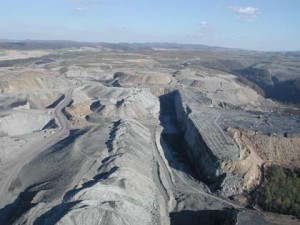
Mountaintop removal is conducted throughout the Appalachian region, but is especially concentrated in southern West Virginia and eastern Kentucky. In mountaintop removal operations, mine operators use explosives and enormous machines to rip hundreds of feet off the top of mountains to expose and remove the coal seams that lay underneath. In the process, millions of tons of waste (that was formerly the mountaintop) are generated.

The current solution preferred by many mining operators for disposing of this waste rock and dirt is to dump it into nearby valleys; this dumping creates "valley fills." Typically, there are networks of streams in the valleys that are filled with the excess mining waste. As a result of the valley fills, these streams, and the aquatic and wildlife habitat they support, are destroyed by virtue of being buried by hundreds of millions of tons of rocks and dirt that was once part of the mountaintop.

" Environmental Harm

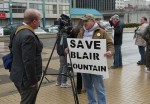
Mountaintop removal is destroying irreplaceable forests and streams. In March 1998, the U.S. Fish and Wildlife Service (FWS) estimated that nearly 500 miles of streams had been lost in only six West Virginia watersheds due to Mountaintop Removal valley fills. This estimate did not include five other major coal mining counties in West Virginia. West Virginia's forests are among the most productive and diverse temperate hardwood forests in the world. According to the US Fish and Wildlife Service, the forests are hotspots for migratory birds. The size of proposed mountaintop removal operations has grown significantly. Mining complexes often create holes of more than 10 square miles in the forest canopy. For instance, Arch's Mountaintop Removal complex in Blair, West Virginia would have destroyed more than 12 square miles of forests and streams. At least two other Arch operations in West Virginia now cover more than 20 square miles each. Such holes in the forest canopy have significant adverse impacts on bird migration.

It is nearly impossible to overstate the destructive effects of mountaintop removal on the surrounding environment. Mountains and forests become barren moonscapes. Waters and aquatic life are buried under tons of rubble. In an order in the Bragg case, issued March 3, 1999, Judge Haden, Chief Judge of the District Court for Southern District of West Virginia, described the view of mountaintop removal sites seen from the air, and assessed the potential damage posed by the mine.

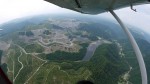
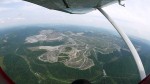
"The Court's helicopter flyover of all mountaintop removal sites in southern West Virginia revealed the extent and permanence of environmental degradation this type of mining produces. On February 26, the ground was covered with light snow, and mined sites were visible from miles away. The sites stood out among the natural wooded ridges as huge white plateaus, and the valley fills appeared as massive, artificially landscaped stair steps. Some mine sites were twenty years old, yet tree growth was stunted or non-existent. Compared to the thick hardwoods of surrounding undisturbed hills, the mine sites appeared stark and barren and enormously different from the original topography.

"If the forest canopy of Pigeonroost Hollow is leveled, exposing the stream to extreme temperatures, and aquatic life is destroyed, these harms cannot be undone. If the forest wildlife are driven away by the blasting, the noise, and the lack of safe nesting and eating areas, they cannot be coaxed back. If the mountaintop is removed, even [the mine company's] engineers will affirm that it cannot be reclaimed to its exact original contour. Destruction of the unique topography of southern West Virginia, and of Pigeonroost Hollow in particular, cannot be regarded as anything but permanent and irreversible."

Judge Haden expanded upon this assessment in his opinion issued on October 20, 1999:

"When valley fills are permitted in intermittent and perennial streams, they destroy those stream segments. The normal flow and gradient of the stream is now buried under millions of cubic yards of excess spoil waste material, an extremely adverse effect. If there are fish, they cannot migrate. If there is any life form that cannot acclimate to life deep in a rubble pile, it is eliminated. No effect on related environmental values is more adverse than obliteration. Under a valley fill, the water quantity of the stream becomes zero. Because there is no stream, there is no water quality."

EPA's draft cumulative impact study on mountaintop removal mining states that, if left unconstrained, mining will fill another 500 miles of streams and destroy 350 square miles of forests in Appalachia.

" Harm to Communities

Not only do these massive valley fills destroy the watersheds in Appalachia, uncontrolled mountaintop removal operations destroy Appalachian coalfield communities.

The environmental and social impacts resulting from mountaintop removal surface mining extend well beyond the streams that are actually filled. The quantity and quality of waters in the vicinity of these operations are often adversely affected and significant portions of the State's forests, mountains and streams are destroyed. The communities below these massive operations are often devastated. The people are effectively forced from their homes by blasting (which often cracks the walls and foundations of their homes), dust, noise, flyrock, the threat of flooding, fear that the valley fills above their homes are unstable, and the degradation of stream and well water. Life near mountaintop removal operations becomes so unbearable that generations-old communities are forced to move away.

A 1997 article in U.S. News and World Report states that rather than fight constant complaints from homeowners, Arch Coal "has bought more than half of the 231 houses in Blair through a subsidiary. Vacated and quickly stripped, at least two dozen have been burned down" by arsonists. In Blair, West Virginia, the elementary school and the town's only grocery stores have closed.

Many people, including some coalfield residents who have lost homes and loved ones in the floods of 2001 and 2002, believe flooding in the region is made worse by mountaintop removal mining. It is a reasonable conclusion. When mountaintop removal coal mining strips a landscape bare of all trees, and valley fills bury headwaters with tons of dirt and rock, storm water will come gushing down more quickly into the communities nestled in the valley. Preliminary federal studies indicate that rain runoff at valley fill sites vary, but the studies indicate that runoff can surge anywhere from 3 percent to 42 percent, ultimately blending with the larger flood pattern. In the most recent floods, nearly a dozen people lost their lives and four West Virginia counties were declared federal disaster areas. In McDowell County alone, 6 people died, close to 200 homes were destroyed, and more than 2,000 others were damaged by flooding.

" Economic Impacts

Recently, the Bush administration filed a motion for a stay pending appeal of West Virginia district court's May 8 Order, which enjoined the Corps from issuing any further § 404 permits that have no primary purpose or use but the disposal of waste. In its brief, the administration argues at length that this injunction will have "devastating" economic effects. But the administration's allegations of impending economic doom are supported only by broad and conclusory affidavits by government officials, with no supporting expert analysis or studies.

The Bush administration's and coal mining companies' claims about significant economic harm are flawed in at least four fundamental respects. First, the administration is again ignoring the results of its own studies that it commissioned in preparation of the EIS on mountaintop mining and valley fills. Second, according to these government studies, most mines do not require valley fills. Third, engineering analysis shows that there are alternatives to putting waste in valley fills. Fourth, according to these government studies, significant restrictions on the size of valley fills will not have significant economic impacts.

The Government Is Ignoring Its Own Studies Showing Prohibition on Mining Waste Valley Fills in Waters of the U.S. Would Not Cause Serious Economic Harm

As stated above, the EPA and other federal and state agencies are preparing an EIS to study the environmental, social, and economic impacts of mountaintop removal mining. The PDEIS and studies directly contradict the claims of economic harm made by the Bush administration and others who insist that weakening Clean Water Act rules is an economic necessity.

As part of the EIS effort, EPA contracted with Hill & Associates (H&A), an economic modeling firm, to model the economic impacts of the various alternatives for restricting the size of valley fills. In a December 2001 final report to EPA, H&A concluded that even the most severe restriction on valley fills studied in the report - one that barred fills covering watersheds more than 35 acres - would raise the price of coal by only $1 per ton and raise the cost of electricity by a few cents per megawatt-hour. In the March 2002 slide show presentation to senior EPA officials in its Washington Headquarters, EPA Region 3 officials characterized these effects as "a minimal impact on the price of coal" and "virtually NO impact on electricity prices." The presentation revealed that significant restrictions on valley fill size would not significantly affect coal supplies, coal prices, or electricity prices:

"Sufficient coal reserves appear to exist under the 250, 150, 75, and 35 acre restriction scenarios necessary to meet demand during the 10 year study period . . ."

"Restricting valley fills to 250, 150, 75, or 35 acre watersheds will increase the price of coal by only $1/ton under each respective restriction scenario."

"Restricting valley fills to 250, 150, 75, or 35 acre watersheds will increase the price of electricity by only a few cents/MWHr under each respective restriction scenario."

Another EPA draft study, dated April 23, 2002, concludes that, even under the 35-acre watershed restriction, annual average impacts to total statewide employment in Kentucky and West Virginia are no more than 0.3% of total year 2000 employment. In addition, there are no "notable differences in [wholesale electricity] prices or generation levels among the alternative [restrictions] . . . due to the competitive nature of the energy markets."

These studies indicate that severe restrictions on the size of valley fills, and even a prohibition of valley fills in waters of the US, would not cause serious economic harm, as the Bush administration claims.

Most Mines Do Not Require Valley Fills

Almost two-thirds of coal mined in Appalachia comes from underground mines. While underground mines do create waste rock and dirt, the amount generated is considerably less compared to mountaintop removal mining. Both in the short and long term, alternatives to dumping these wastes into streams exist and are already utilized by many coal mining companies.

The mountaintop removal PDEIS contains an extensive inventory of the valley fills in the four-state region of Kentucky, West Virginia, Tennessee and Virginia where surface coal mining is concentrated. Over 90% of the 5,585 valley fills approved between 1985 and 1999 are in Kentucky and West Virginia. During that time, only 1,271 out of 6,234 mining permits in Kentucky (20%), and 305 out of 2,527 mining permits in West Virginia (12%) were issued with valley fills. Thus, historically, most surface mining operations do not use valley fills, and a prohibition on fills in waters would not affect those mines. The same principle applies to pending permit applications, which are the only ones that would be affected by the Court's prospective order. According to WVDEP, only 59 of the 123 pending applications for mining permits in West Virginia, and only 11 out of 157 applications for incidental boundary revisions and permit applications, contemplate filling waters of the United States.

Furthermore, even for the coal mines that do apply for fills, a ban on new valley fills would not shut down all of those mines in the short term. The PDEIS states "[a]n industry practice is to permit more surface area for disturbance than is likely to be affected by the operations planned. This allows the mining operation to respond more quickly to changing market conditions." Thus, there is surplus capacity that has already been permitted, and that would not be affected by a prospective ban on new valley fills in waters of the US. That was apparently the situation in 1999, when no valley fills were approved by West Virginia, yet statewide coal production was virtually the same in 1999 and 2000. Thus, the lack of fills does not necessarily have an immediate impact on coal production.

There Are Alternatives to Dumping Coal Mining Waste into Streams Coal mining waste should not be dumped in streams, and it does not have to be dumped into streams. Mining companies choose to dump their wastes in waters when it is the cheapest alternative, and regulatory prohibitions are not enforced. Coal companies seek to optimize maximum coal recovery at the least cost. But there are alternatives.

The impact of valley fill restrictions varies from mine to mine, and requires a site-specific engineering analysis. Broad brush statements that the coal companies have no choice but to dump their wastes in streams are incorrect. Potential alternative sites for placing waste include previously mined areas that were not returned to their approximate original contour, previously disturbed areas such as old refuse impoundments, side hill fills, and more distant disposal locations; in addition, companies can redesign the fill configuration and change their mining equipment to reduce fill impacts. Underground mines generate much less waste rock and dirt than surface mines, and there are available alternatives for placement of that waste as well. These alternatives to placing mining waste in streams should be used instead of dumping waste in waterways.

Clean Water Act regulations require consideration of these alternatives. Where a proposed project to fill waters "does not require access or proximity to or siting within the special aquatic site in question to fulfill its basic purpose (i.e. is not 'water dependent'), practicable alternatives that do not involve special aquatic sites are presumed to be available, unless clearly demonstrated otherwise." Regardless of the definition of fill material, the Corps is not authorized to issue a § 404 permit "unless appropriate and practicable steps have been taken which will minimize potential adverse impacts of the discharge on the aquatic ecosystem." Since surface coal mining is not "water dependent" and alternatives to filling streams exist, granting of § 404 permits for the disposal of waste in streams, as the Bush rule purports to do, is illegal for this reason as well.

" Post-Mining Land Uses

Some proponents of mountaintop removal coal mining claim that it is needed to create more flat land for development purposes. While there may be a few examples here and there of airports or factories being built on mountaintop removal sites, it is extremely unlikely that any significant percentage of mountaintop removal sites, including the valley fills, will ever support development. As noted above, EPA's draft cumulative impact study on mountaintop removal mining states that, if left unconstrained, mountaintop removal mining will destroy 350 square miles of forested land; This is in addition to the hundreds of square miles that have already been flattened. According to one estimate, less than 1 percent of the mined land is reused for any development purpose.

The Bush administration's studies conclude that, in fact, post-mining land uses are not occurring as envisioned. Remarkably, the Office of Surface Mining (OSM) appears to want to address this problem by deleting actions to ensure that post-mining land uses do occur from further consideration in the EIS:

Post Mining Land Uses (PLMU) studies suggest that, in general, post-mining development is not occurring as envisioned when variance are requested from the requirements to return the land to a condition capable of supporting its prior use. Actions to ensure that PMLU development occurs as envisioned have been developed, but OSM recommends deleting these actions from further consideration in the EIS.

Under the Bush Administration's Rule, Many Other Wastes Will Bury Waters

There is probably no region of the country that will be more adversely effected by this "waste in waters" rule change than the coal mining communities of Appalachia. But the Bush administration's rule change undoubtedly will have significant nationwide effects. While the "waste exclusion" in the Corps' clean water regulations was removed from the rules primarily for the coal mining companies, the final rule would give the Corps discretion to permit any industry, governmental agency, or individual to bury rivers, streams, lakes, and wetlands all across the country under tons of mining waste, waste from other excavation activities, mining tailings, construction and demolition debris, plastic waste or almost any other sort of solid waste.

According to the final rule, examples of wastes now eligible for § 404 permits include, but are not limited to "rock, sand, soil, clay, plastics, construction debris, wood chips, [and] overburden from mining or other excavation activities." In addition, another part of the new definition makes clear that "placement of overburden, slurry, or tailings or similar mining-related materials" are also to be permitted. As the new definition states, this is not an exhaustive list. There are many other types of industrial wastes that the Corps could also try to permit to be dumped into waters. Even wastes that may be "chemically contaminated" would not be ruled out under this proposal; in fact, the administration argues that the provisions of § 404 regulations and its related guidelines are adequate to address such cases.

The list of waste that would be considered "fill material" in the proposed rule, published in the Federal Register on April 20, 2000, was also not exhaustive, but the examples were far more limited: "rock, sand and earth" and "placement of coal mining overburden."

Below is a review of some of the wastes that are included in the new "waste in waters" rule.

" Coal mining slurry

Coal slurry, a cement-like substance generated during coal processing, is another waste material that would expressly be allowed to be dumped into waters under the Bush rule. As with valley fills, the Corps has been permitting coal companies to dump their slurry waste into impoundments created in streams for years.

Slurry spills destroy homes, contaminate drinking water and kill wildlife; uncertainty over the long-term health and environmental effects associated with major spills leaves residents fearing the worst. During the devastating floods that hit West Virginia in May of 2002, a coal slurry impoundment in McDowell County - an area particularly hard-hit by floods - spewed blackwater slurry at a 5,000-gallon-a-minute-rate. In October of 2000, an impoundment in eastern Kentucky spilled 250 million gallons of waste, adversely affecting at least 100 miles of streams creeks, and rivers. Perhaps the most devastating coal slurry spill is the famous "Buffalo Creek Disaster" of 1972, where the collapse of a Pittston Coal dam in West Virginia killed 125 people and left 4,000 homeless.

Coal slurry impoundments present a significant risk to downstream waters, communities, and wildlife. Its explicit inclusion in the definition of materials deemed suitable to use as "fill" in waters will continue this harm unnecessarily, particularly when the National Academy of Sciences concluded in an October 2001 study that there are alternatives to coal slurry impoundments and called for a "broad study of ways to reduce or eliminate the need" for the impoundments. There are numerous alternatives available for the disposal of coal slurry other than dumping that waste into streams.

" Hardrock mining tailings and other wastes

As noted in the 1999 National Research Council report, Hardrock Mining on Federal Lands, modern open-pit hardrock mining generates vast amounts of waste rock/overburden, tailings and beneficiation/processing wastes. Often, these facilities are located directly in riverine valleys, the so-called "valley fills." As noted by the Council's report, "Obviously, if a valley is filled, the vegetation in the valley will be destroyed. Once filled, the riparian vegetation that requires the conditions found at the bottom of the valley cannot be restored."

A 1992 Congressional Office of Technology Assessment report estimated that the mineral mining industry generated about 1.7 billion tons of extraction and beneficiation wastes in 1987 but cannot provide a comparable estimate for mineral processing wastes. This estimate does not even include the tonnage of waste rock and dirt overburden generated at hardrock mining sites. According to the EPA's most recently released Toxics Release Inventory, in 2000 alone, the metal mining industry release 3,315,896,409 (3.3 billion) pounds of toxics to land.

The threat to western stream and wetlands that the new "waste in waters" rule poses is obviously considerable, as these hardrock mining wastes are explicitly included in the new definition of fill.

" Construction and demolition debris

Waste is generated every time a building, road, or bridge is constructed, remodeled, or demolished. Known as construction and demolition (C&D) debris, this waste often contains bulky, heavy materials, including concrete, wood, asphalt (from roads and roofing shingles), gypsum (the main component of drywall), metals, bricks, and plastics. C&D debris also includes salvaged building components such as doors, windows, and plumbing fixtures.

The EPA estimates that 136 million tons of building-related C&D debris was generated in the United States in 1996. The majority of this waste comes from building demolition and renovation, and the rest comes from new construction. This figure does not include debris from road, bridge or land-clearing projects, which comprise a large (but in this report, unquantified) portion of the C&D waste stream.

Currently, an estimated 30 to 40 percent of C&D "is managed on-site, at [municipal solid waste] landfills, and unpermitted sites." Even a small fraction of this waste, if disposed of in wetlands, streams, ponds, or rivers, could have a significant negative effect on waters of the nation.

" Other Wastes

Other wastes specifically referenced in the final rule as being eligible for the new Corps waste dumping permits include overburden from other excavation activities, wood chips, and plastic. None of these categories is further defined, and each seems like it could encompass millions - if not billions - of tons of material nationwide. All waste rock and dirt from any type of excavation operation must be quite an enormous amount of waste. If the Corps allows excavation operations to now dump that wastes into streams or wetlands instead of moving it to a dry upland site, it is likely that thousands of acres of wetlands and miles of stream will be destroyed as a result. No explanation is provided in the final rule for including these categories of waste in the new definition of fill material. And as with all of the categories of waste fill, no environmental assessment of the effects of dumping excavation waste, waste wood chips, or plastic waste in waterways was conducted.

" Garbage

The only waste not permitted to be used as fill material in waters of the U.S. under the Bush administration's "waste in waters" rule, at least not as a general matter, is trash or garbage. It is worth noting that the agencies' rationale for this single exclusion should also make waste rock, sand, soil, clay, plastics, construction debris, wood chips, overburden from mining or other excavation activities, slurry, or tailings and similar mining-related materials ineligible to be used as fill - if the criteria enumerated by the agencies were fairly applied.

"The agencies have added an exclusion for trash or garbage to the definition of ``fill material'' for several reasons. First, the preamble to the proposed rule and many of the comments recognized that trash or garbage, such as debris, junk cars, used tires, discarded kitchen appliances, and similar materials, are not appropriately used, as a general matter, for fill material in waters of the U.S. In particular, we agree that the discharge of trash or garbage often results in adverse environmental impacts to waters of the U.S. by creating physical obstructions that alter the natural hydrology of waters and may cause physical hazards as well as other environmental effects. We also agree that these impacts are generally avoidable because there are alternative clean and safe forms of fill material that can be used to accomplish project objectives and because there are widely available landfills and other approved facilities for disposal of trash or garbage."

The discharge of waste rock, sand, soil, clay, plastics, construction and demolition debris, wood chips, overburden from mining or other excavation activities, slurry, or tailings and similar mining-related materials also results in adverse environmental impacts to waters of the U.S. by creating physical obstructions that alter the natural hydrology of waters and may cause physical hazards as well as other environmental effects, and their disposal in waters is also generally - if not always - avoidable.

As the court rightly observed in Kentuckians For The Commonwealth:

"The obvious perversity of this proposal forced the agencies to suggest baseless distinctions among wastes: "trash" and "garbage" are out; plastic, construction debris and wood chips are in. The final rule for "discharge of fill material" highlights that the rule change was designed simply for the benefit of the mining industry and its employees. Only one type of waste is added to the otherwise constructive list: "overburden, slurry, or tailings or similar mining-related" waste are now permissible fill in the nation's waters."

The National Mining Association Gets Its Way

Finally, there were two provisions of the proposed rule that somewhat limited the use of § 404 fill permits for waste materials other than coal mining overburden. While neither of these two provisions were adequate substitutes for the broad-based waste exclusion in the existing regulations that was proposed for deletion, both of these provisions weighed against the permitting of processed or contaminated waste materials under § 404.

Both provisions were removed from the Bush administration's final rule at the request of the National Mining Association and its member groups, including both coal mining and hardrock mineral mining interests that wanted the final rule written to their specifications. In the final rule, the Bush administration gave them exactly what they asked for.

" "Unsuitable Fill"

First, the preamble to the April 2000 draft rule suggested that the final rule would contain a definition of "unsuitable fill material" and asked for public comments on this proposal. The proposal stated that the Corps could include within its regulations a definition for "unsuitable fill material" that would read generally as follows:

The term "unsuitable fill material" means any material proposed to be discharged into waters of the United States that would fall under the definition of "fill material," but which the District Engineer determines to have physical or chemical characteristics that would make the material unsuitable for a proposed discharge into waters of the United States, so that there is no reasonable possibility that a section 404 permit can be granted for the proposed discharge of that particular material. For example the District Engineer may determine that fill material is unsuitable because of the potential for the leaching of contaminants from the fill material into ground waters or surface waters, or because the proposed fill material is too light or unstable to serve reliably for its intended purpose (e.g., bank stabilization or erosion control). In most circumstances, heterogeneous solid waste, discarded appliances, and automobile or truck bodies would qualify as unsuitable fill material. In addition, material containing toxic pollutants in toxic amounts (see section 307 of the Clean Water Act) is unsuitable fill material.

In its comments to the proposed rule, NMA argued that the inclusion in the rule of a definition of unsuitable fill material "could lead to the denial of permits that presently receive authorizations, and it would vest the District Engineer ("DE") with unfettered discretion to reject § 404 applications." Phelps Dodge, the country's largest copper mining company, complained "the agencies are proposing to add a new definition to its 404 permitting regulation for 'unsuitable fill material'. . . . Examples of unsuitable fill materials include materials that have the potential for the leaching of contaminants to groundwater or surface water or materials that contain toxic pollutants in toxic amounts. Phelps Dodge opposes the adoption of the proposed definition of unsuitable fill material . . . The vast majority of fill materials, including rock and dirt, has the potential to leach contaminants."

Apparently agreeing with the mining companies that no waste (other than trash or garbage) generated by any industry is unsuitable for dumping into waters of the United States, the Bush administration dropped the "unsuitable waste" category from the final rule.

" Discharges with Effluent Limitations

Second, the definition of fill in the April 2000 proposal contained an exception not included in the final rule: "The term fill material does not include discharges covered by proposed or final effluent limitations guidelines and standards under sections 301, 304 or section 306 of the Clean Water Act (see generally, 40 CFR part 401), or discharges covered by an NPDES permit issued under section 402 of the Clean Water Act."

At that time, the EPA and Corps argued that the proposed "effects-based" definition of fill material required this clarification "because, read literally, it could subject to regulation under CWA section 404 certain pollutants that have been, are being, and should be regulated by the technology and water quality based standards used in the section 402 program." Examples given were industrial waste or sewage that contain suspended solids which ultimately will settle to the bottom following discharge and could raise the bottom elevation of the water, potentially making them eligible for a § 404 fill permit (and thus possibly exempt from the § 402 permitting requirement). Therefore, the agencies reasoned, "where such pollutants are covered by proposed or final effluent limitations guidelines and standards under section 301, 304, or 306 of the CWA or the discharge is covered by a . . . permit issued under section 402 of the CWA, the proposed rule would exclude the discharge from the definition of fill."

The Bush administration's rationale for deleting this language from the final rule states:

Several of the comments raised concerns that the exclusion included in the proposed definition for discharges covered by proposed or existing effluent limitation guidelines or standards or NPDES permits was vague and would result in uncertainty with respect to the regulation of certain discharges. Other comments stated that it was inappropriate for rule language to allow reliance on proposed effluent limitation guidelines or standards before they are promulgated as a final rule. In addition, including the language in the actual rule could raise questions as to whether the reference to effluent guidelines was meant to refer only to those in existence at the time today's rule was promulgated or whether the reference was prospective.

Again, these were the concerns of the NMA and other mining companies. In their comments, the NMA said they saw "a potential ambiguity arising . . . whereby discharged material that has the effect of replacing portions of waters of the U.S., or substantially raising the bottom elevation for such waters, could conceivably result in attempts to be excluded from § 404 coverage simply due to the presence of constituents in the material that would be literally pollutants for which [effluent limits] exist if such constituents were discharged in waste water (i.e., mine drainage or process water) subject to § 402 permitting requirements."

In other words, as long as they dump enough tailings or other waste "constituents" into a waterway so that the waterway is filled, mining companies and others should be able to apply for a § 404 "fill" permit from the Corps for the part of the waste discharge that would bury the water - even if the waste to be discharged has an effluent limitation and would otherwise be regulated under § 402 of the law. This seems to create a potential loophole - most likely an illegal one - that could give companies the incentive to dump more waste into waters instead of less. But, again, the mining companies got their way with the Bush administration.

Conclusion

If it ever goes into effect, which Earthjustice hopes will never be the case, the "waste in waters" rule change would give the Corps discretion to permit any industry, governmental agency, or individual to bury rivers, streams, wetlands and other waters all across the country under tons of coal and hardrock mining waste, construction or demolition debris, tires, coal ash or almost any other sort of solid waste. It short, the Bush administration's rule would allow the Corps to issue permits for the disposal of virtually any waste in any waters of the United States.

This is likely the worst thing to happen to the Clean Water Act and the future of our nation's waterways since the law was passed 30 years ago. What is most startling about the Bush administration's new rule is that it was finalized without any review whatsoever of the environmental and societal harm that eliminating the 25-year old prohibition on using waste as fill materials will have as our nation's wetlands, streams, lakes, ponds, rivers and coastal areas are obliterated under piles of industrial wastes.

The administration ignored the information prepared by and for its own agencies in order to allow the destruction of mountaintop removal to continue. It gave in to all of the demands of the mining industry to open up the rule to allow virtually any kind of mining waste, including those contaminated with toxins, to be dumped in waterways. It conducted no environmental review of any kind about the potential, likely or known harm that this rule change will allow. In a word, what this administration has done is unconscionable.

Appalachia is already treated as the country's sacrifice zone in pursuit of a backward-looking national energy policy too reliant on extracting non-renewable, polluting sources of power like coal from the Earth. Now, the Bush administration has added to this sacrifice the integrity of the nation's waters from coast to coast and everywhere in between.

Because Judge Haden has enjoined the Corps from issuing any Clean Water Act permits for the purpose of waste disposal, there may not be an immediate need for Congress to act to overturn the administration's actions. But as the legal battles on this rulemaking continue, as they undoubtedly will for some time, it could make sense for Congress to step in and settle the matter once again by reconfirming that allowing waste dumps to bury waters is wholly inconsistent with the letter and the purpose of the law.

In any event, Members of Congress who support the goal of protecting the integrity of the nation's waters as we near the 30th anniversary of the Clean Water Act, should take a stand publicly against the Bush administration's "waste in waters" rule change.

Thank you again, Mr. Chairman, for the opportunity to testify on this important issue.


   Smart Counter Details   OVEC Home   Issues   Contact   Join   Site Map